Why does mould return after cleaning?
Removing visible growth does not prevent recurrence unless moisture is controlled.
Read guide →Moisture in indoor air can condense on cold surfaces, particularly where insulation or air movement is poor. Leaks must still be ruled out.
Not sure of the cause? Use the leak finder →
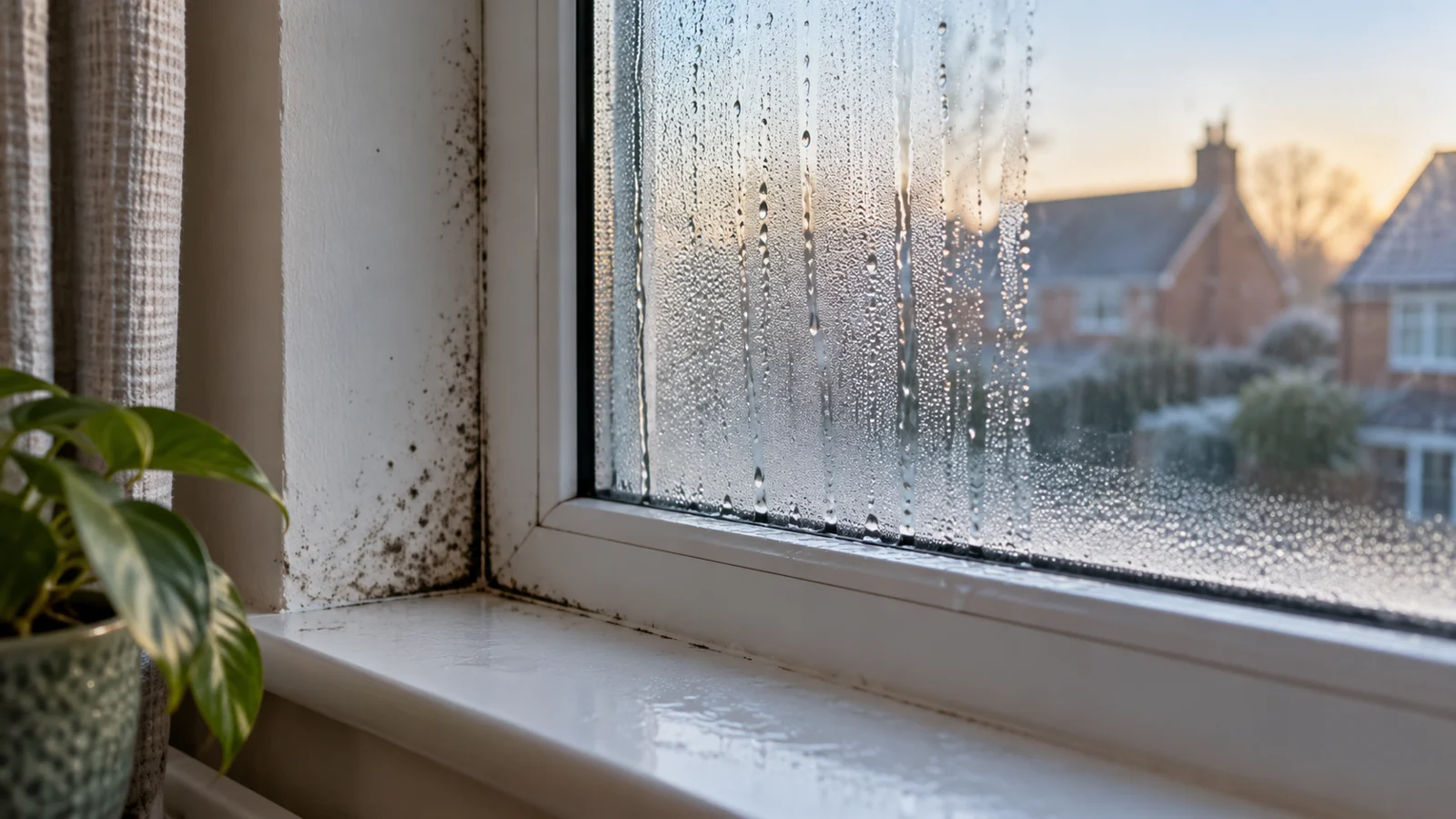
Removing visible growth does not prevent recurrence unless moisture is controlled.
Read guide →Restricted air movement against a cold exterior wall can raise surface humidity.
Read guide →Occupancy moisture, heating patterns and insulation gaps can combine.
Read guide →Improved airtightness may reduce accidental ventilation without adequate planned extraction.
Read guide →Surface temperature and indoor vapour levels are more informative than the wall feeling wet.
Read guide →A dehumidifier can reduce airborne moisture but will not repair rainwater or plumbing leaks.
Read guide →Trapped moisture and cold surfaces may allow concealed growth.
Read guide →Lower solar gain and cold wall surfaces can encourage condensation under certain conditions.
Read guide →Background ventilation can help when correctly installed and used alongside extraction and heating.
Read guide →Check extractor performance, run-on time, heating and persistent leaks.
Read guide →Design errors and cold bridges matter more than insulation quantity alone.
Read guide →Investigate cold bridges, condensation and low-level water entry before diagnosing rising damp.
Read guide →Moisture from laundry needs adequate extraction or ventilation.
Read guide →Monitor trends and condensation rather than treating a single meter reading as proof.
Read guide →Air movement alone may not overcome cold surfaces or active moisture sources.
Read guide →Identify room-side droplets, sealed-unit condensation and rain leaks as separate issues.
Read guide →