Can rain penetrate a cavity wall?
Weathering defects and cavity bridging can allow moisture past the outer leaf.
Read guide →Walls and openings are designed to manage rain, not simply block every drop at the outer surface. Details around openings and cavities matter.
Not sure of the cause? Use the leak finder →
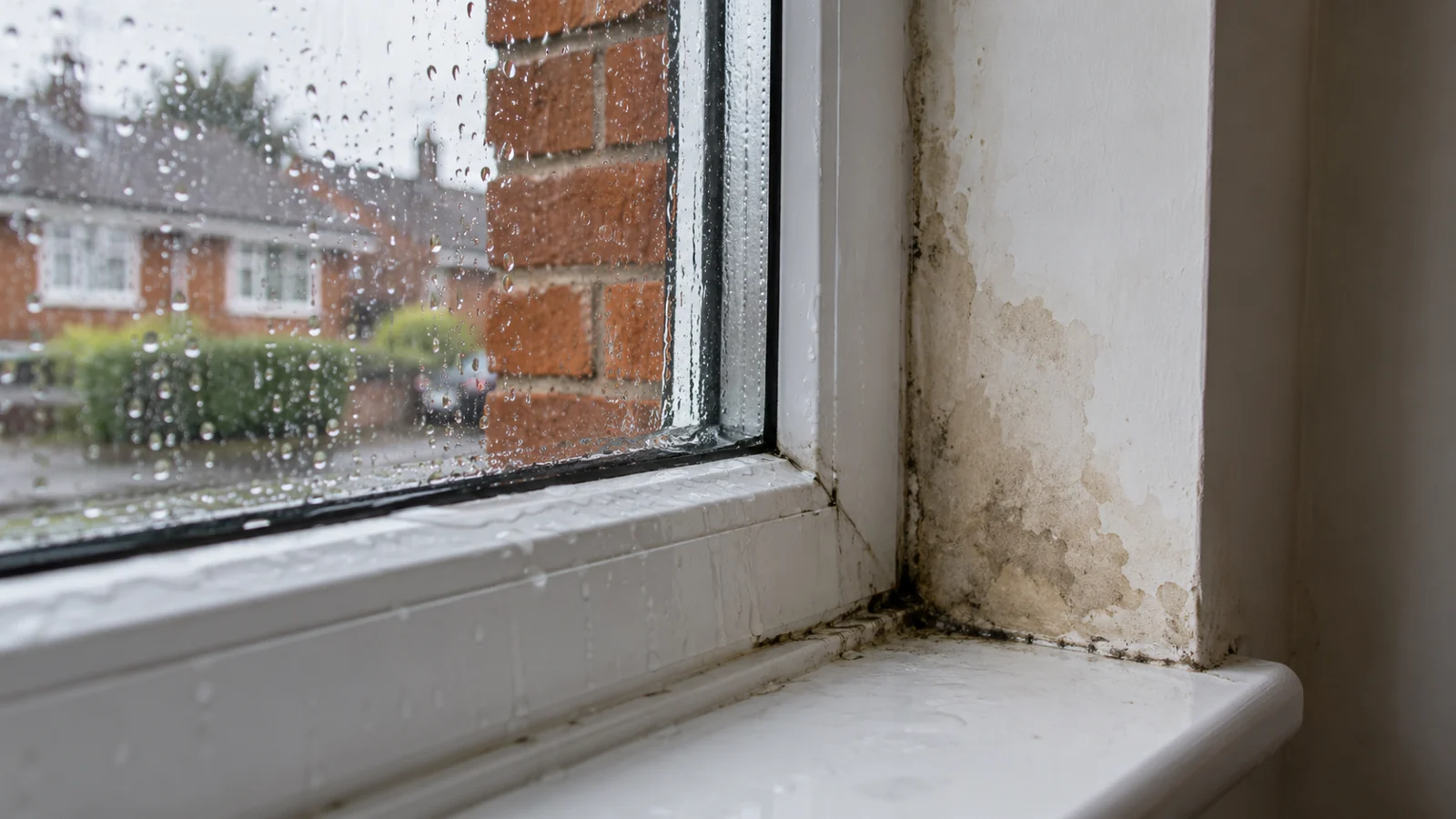
Weathering defects and cavity bridging can allow moisture past the outer leaf.
Read guide →Missing or poorly detailed trays can direct water inward at openings and roof junctions.
Read guide →Check perimeter joints, sill detailing, cavity trays and condensation separately.
Read guide →Render cracks can admit rain, although moisture may have other entry routes.
Read guide →Weep openings help drain some cavities, but their absence is not proof of a defect in every wall.
Read guide →Threshold height, seals and paving levels all affect wind-driven rain entry.
Read guide →An incorrectly sloped sill or failed end dam may return water into the wall.
Read guide →Investigate roof and wall abutments, concealed services and cold bridging.
Read guide →Failed mortar joints may increase exposure, but repointing alone will not fix all damp.
Read guide →Prevailing wind, exposed elevations and facade details help explain differences.
Read guide →Poor installation, exposed locations and existing defects must be evaluated before blaming insulation.
Read guide →Consider cold bridging, condensation, sill leakage and cavity tray defects.
Read guide →Cracks may admit moisture but their position and depth determine significance.
Read guide →Blocked drainage routes may trap water above openings in some wall designs.
Read guide →Failed junctions and wall fixings may direct water behind the canopy.
Read guide →Flashing defects, salts and flue condensation each produce different patterns.
Read guide →More airtight replacements can change ventilation and surface temperature conditions.
Read guide →Trapped moisture and inadequate detailing may be involved; diagnosis depends on construction.
Read guide →