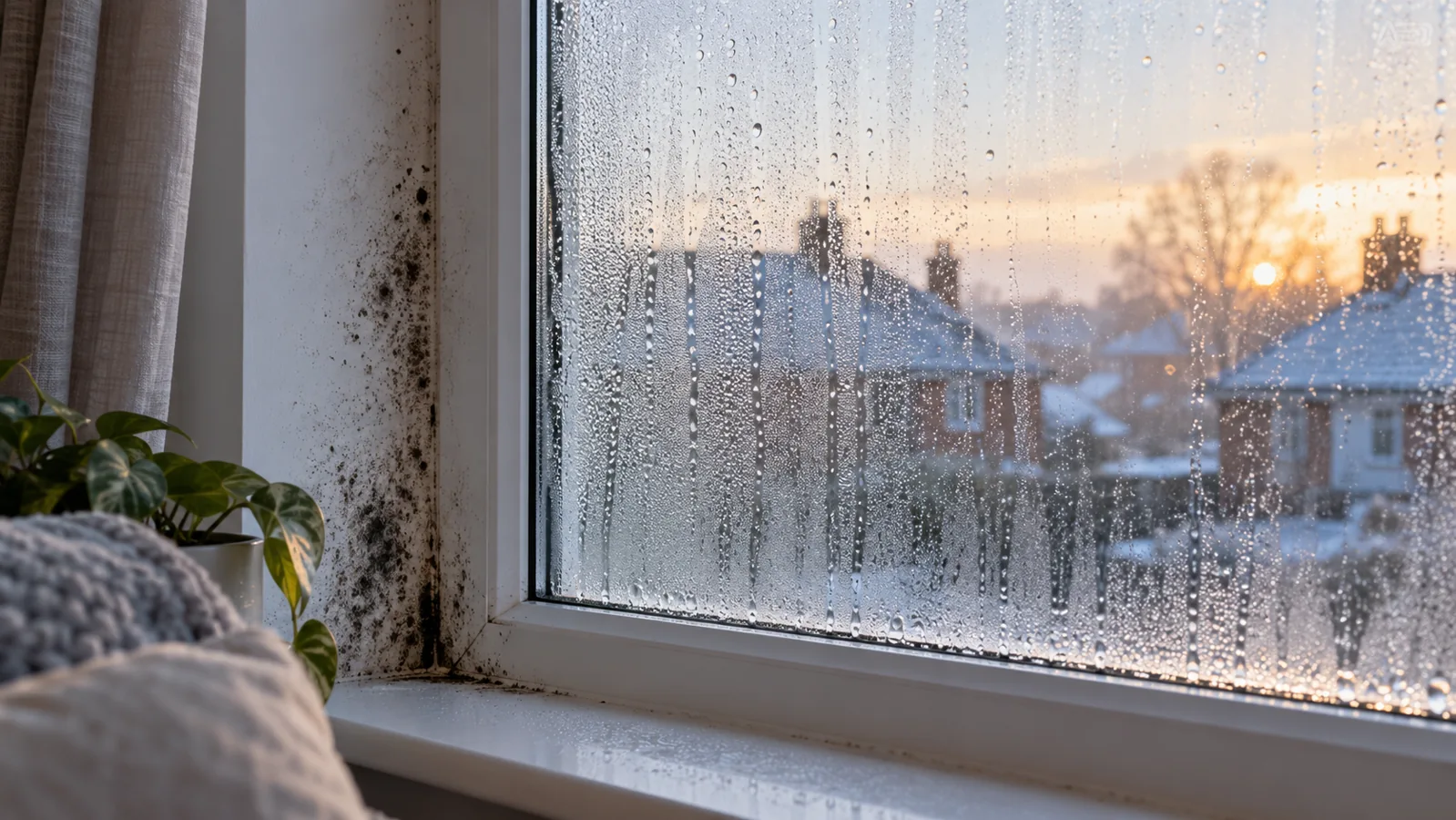
Roof leaks
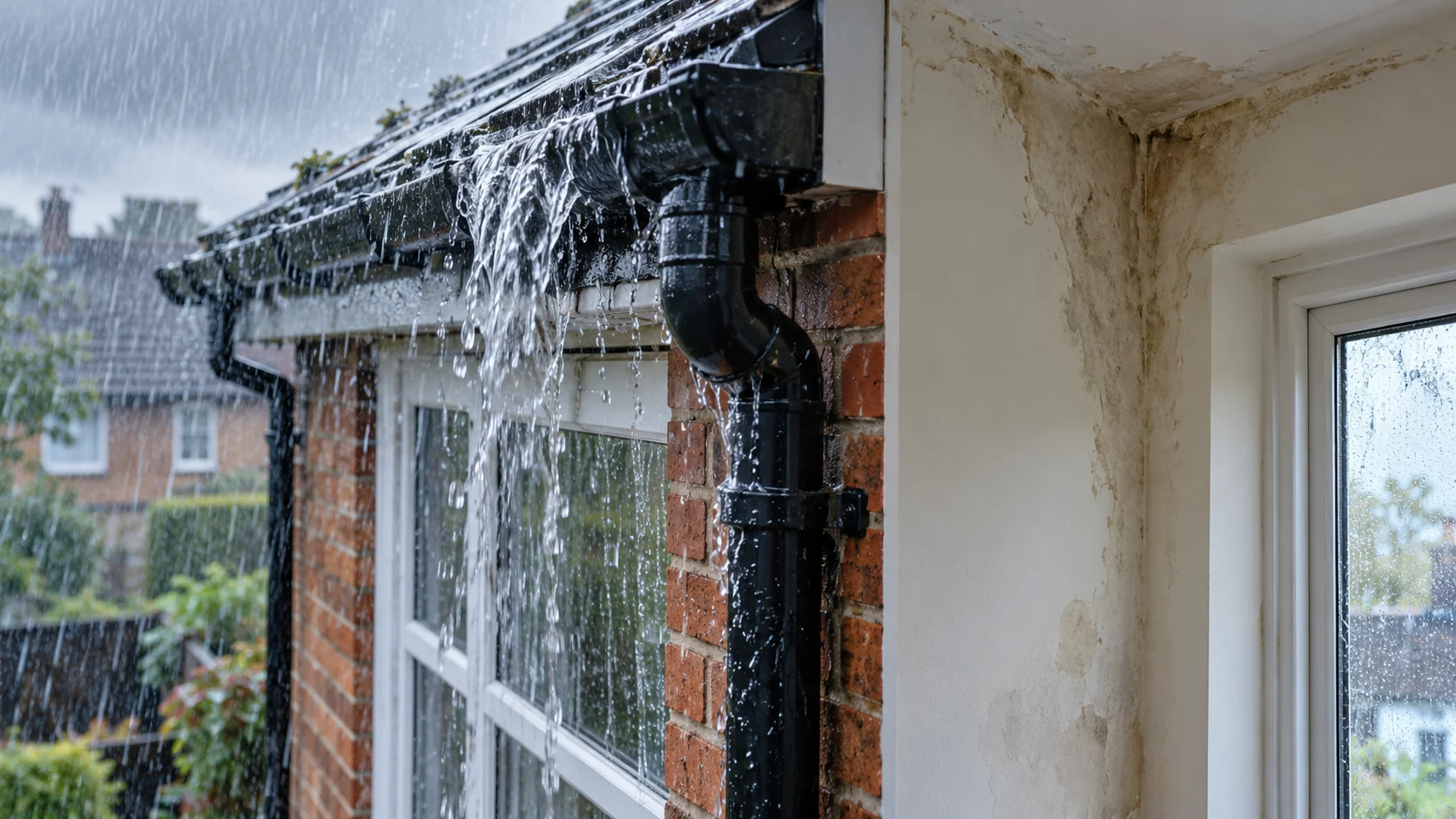
Rainwater is supposed to shed from the covering into gutters. Trouble develops where laps, flashings and junctions are interrupted or water is held back.
Investigate roof leaks →A damp patch does not tell you where the water came from. Explore straightforward UK guides to condensation, mould, leaks, rising damp and the treatments you may be offered.

Browse individual guides to roof leaks, plumbing, overflowing gutters and moisture entering through walls and windows.
Rainwater is supposed to shed from the covering into gutters. Trouble develops where laps, flashings and junctions are interrupted or water is held back.
Investigate roof leaks →Leaks from supplies and wastes may be intermittent, hidden or dependent on use. Tracking when moisture appears is often more useful than the size of the stain.
Investigate plumbing leaks →Rainwater should move away from the building through gutters, downpipes, gullies and suitable drainage. Overflow can be mistaken for a damp-proofing problem.
Investigate gutters and rainwater →Walls and openings are designed to manage rain, not simply block every drop at the outer surface. Details around openings and cavities matter.
Investigate walls, windows and doors →A flat roof relies on continuous waterproofing, adequate falls and carefully formed outlets and upstands. A stain indoors rarely identifies the precise entry point.
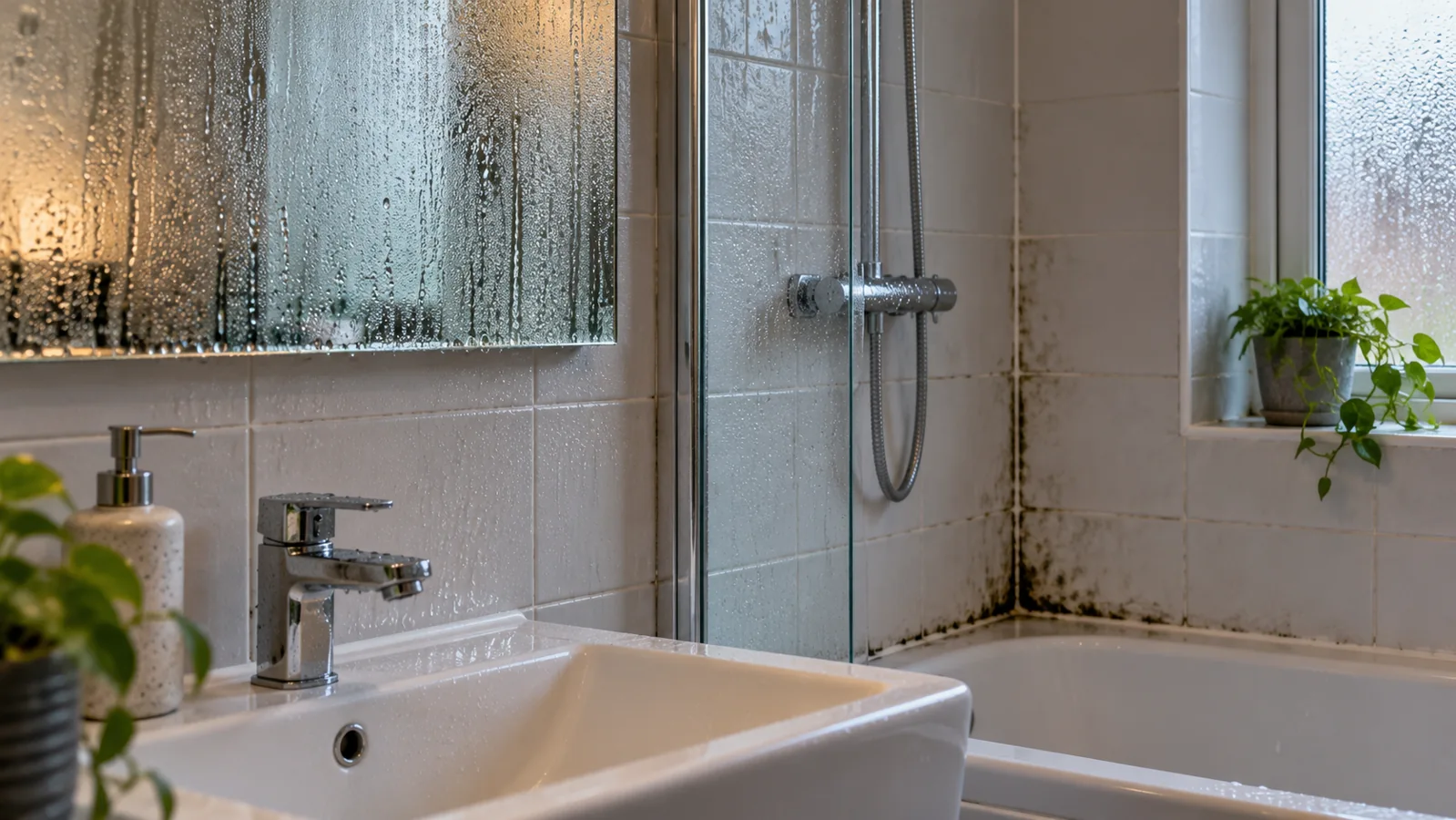
Investigate flat roofs and extensions →Moisture in indoor air can condense on cold surfaces, particularly where insulation or air movement is poor. Leaks must still be ruled out.
Investigate condensation and mould →Not sure where the water is coming from? Open the leak finder →
Choose the description closest to what you can see. These are starting points, not instant diagnoses.
Different symptoms point towards different causes. Start with the right line of investigation.

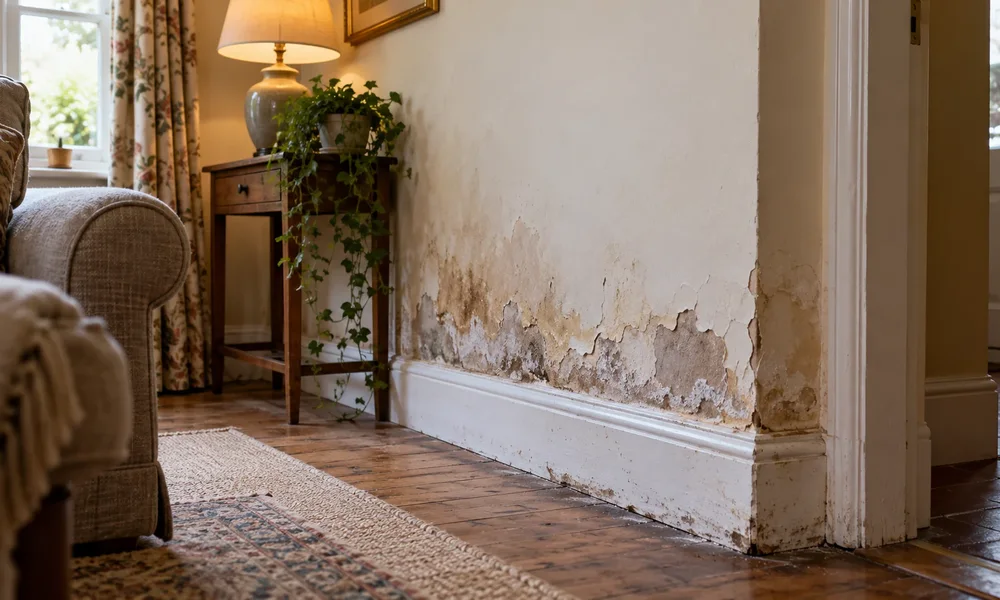
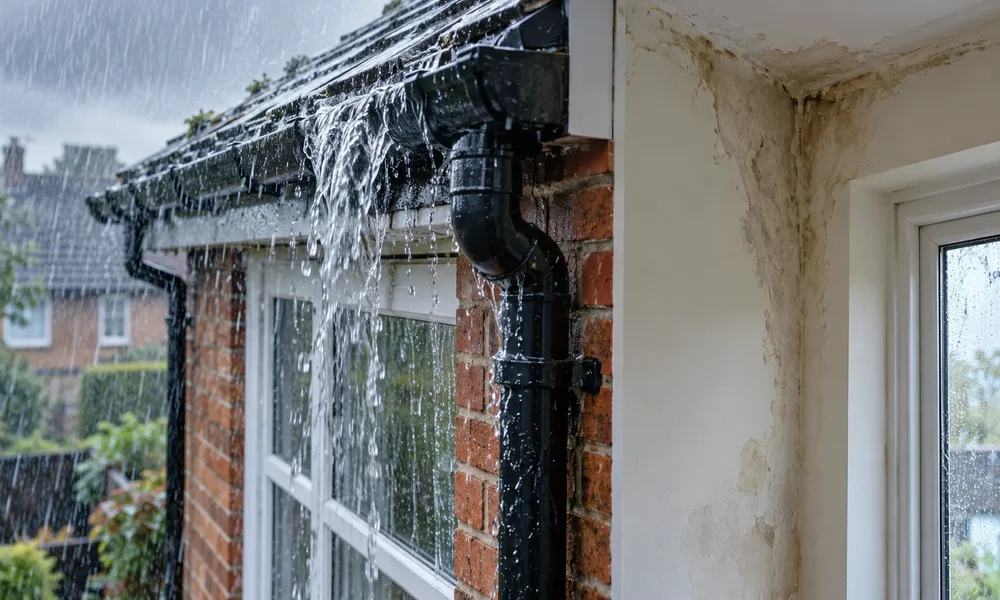
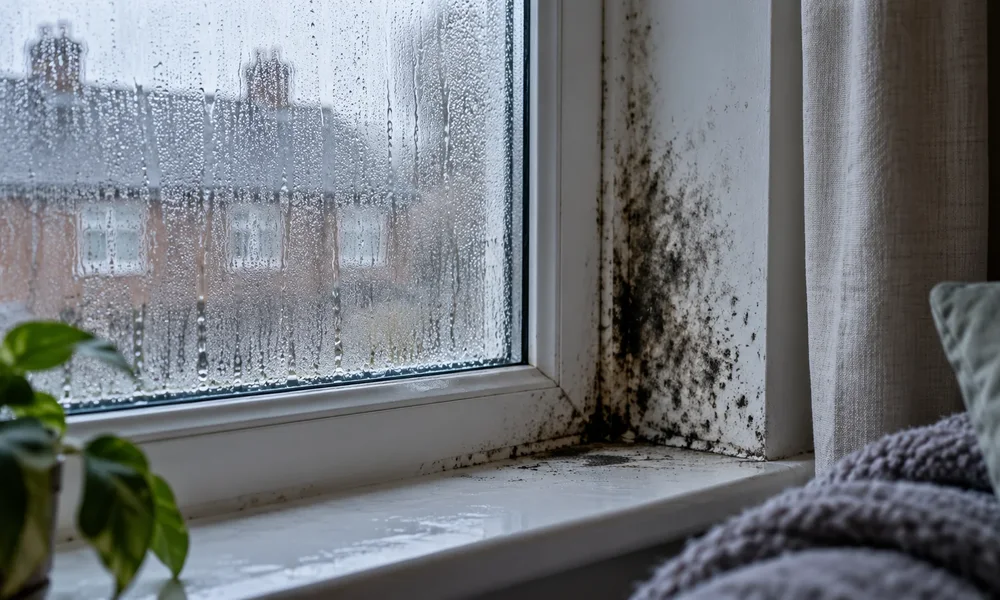
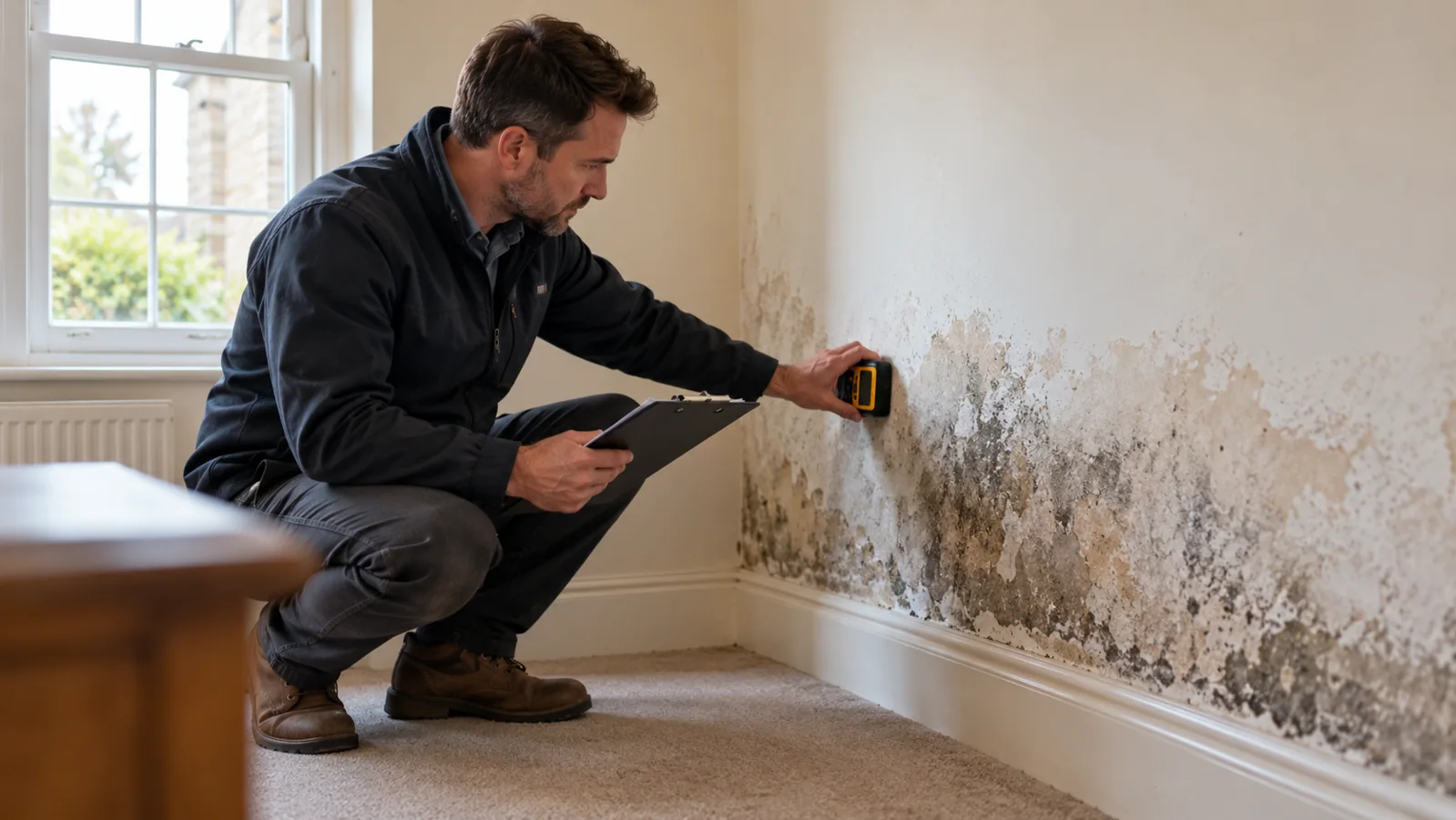
Ask whether rain, plumbing, condensation, ventilation, drainage and ground conditions have all been considered.
A high meter reading alone is not enough. Ask for observations, photographs and an explanation.
Make sure the recommended treatment tackles the source, not just the visible staining.
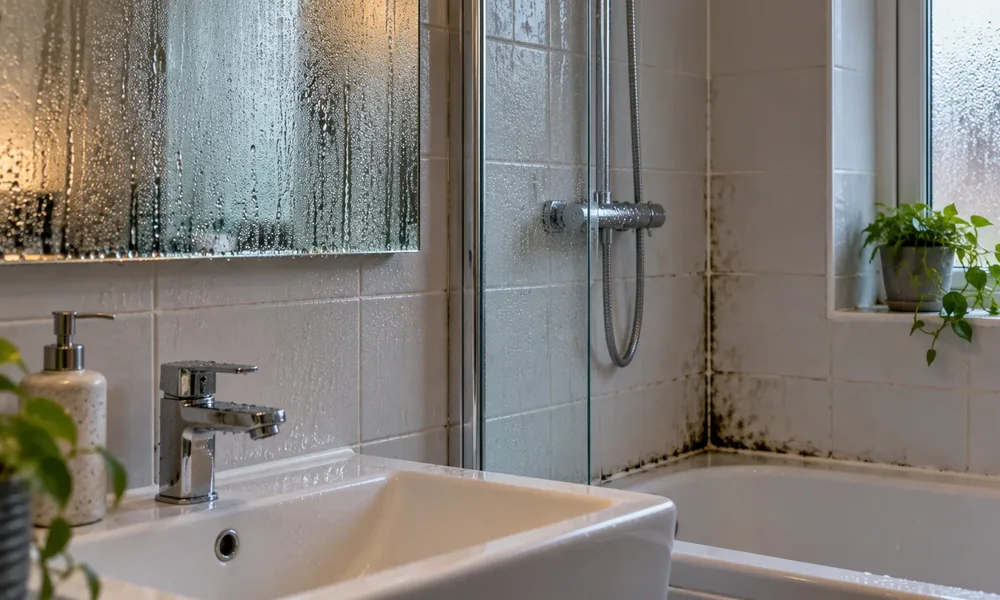
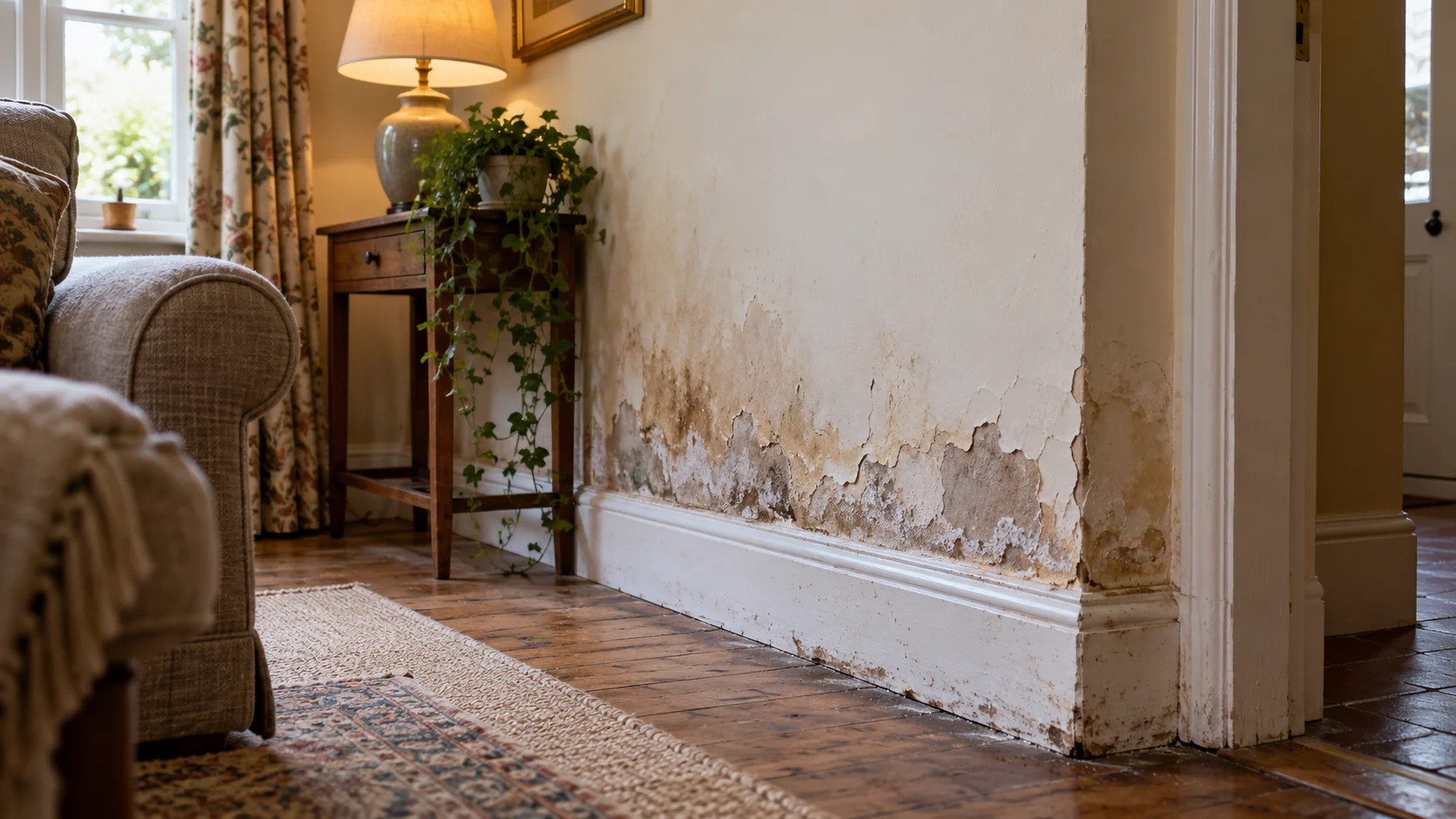
A low damp patch does not establish rising damp. Look for the source before choosing a treatment.
Read the guide →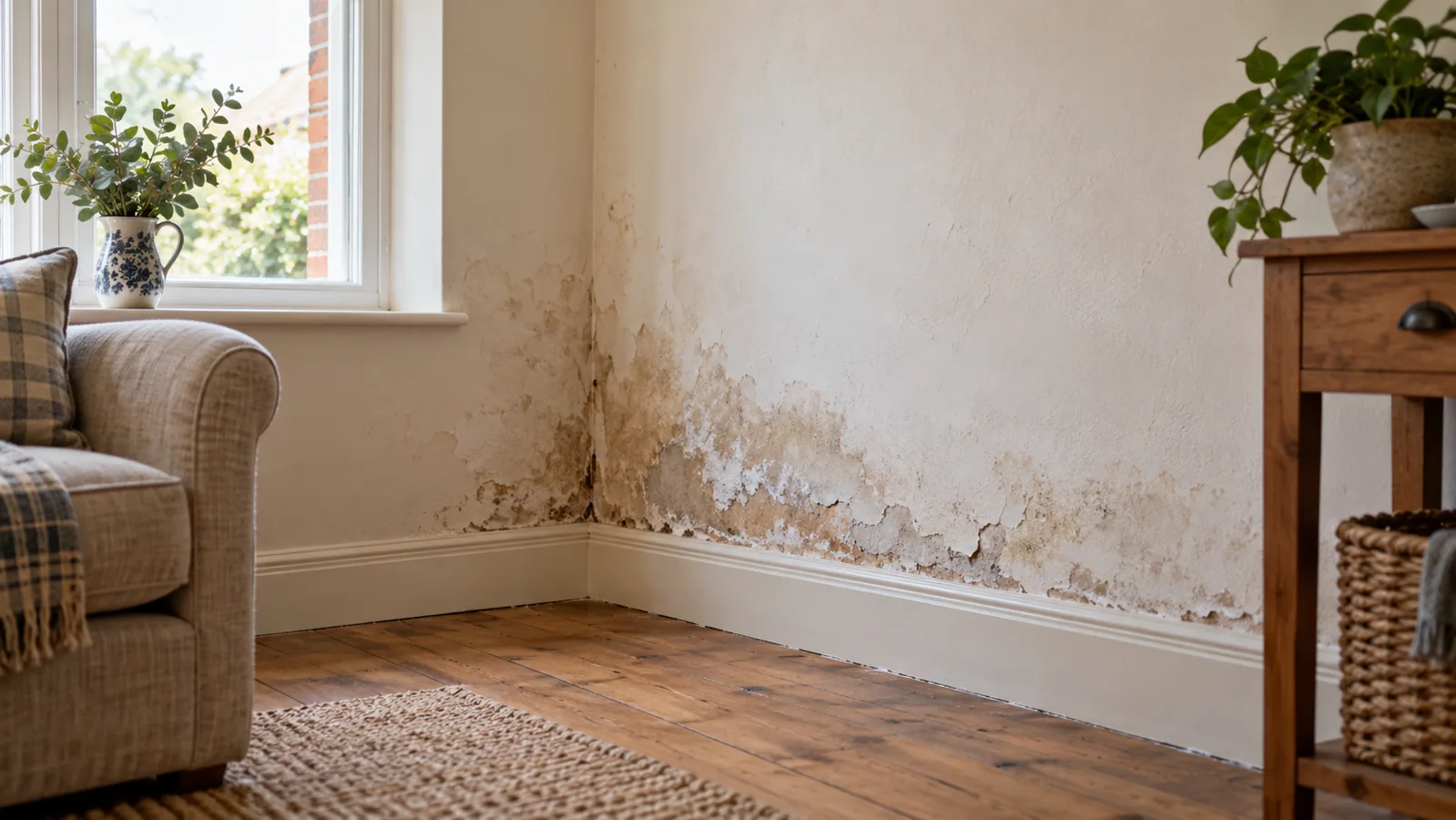
The diagnosis should stand up to scrutiny before you pay for treatment.
Read the guide →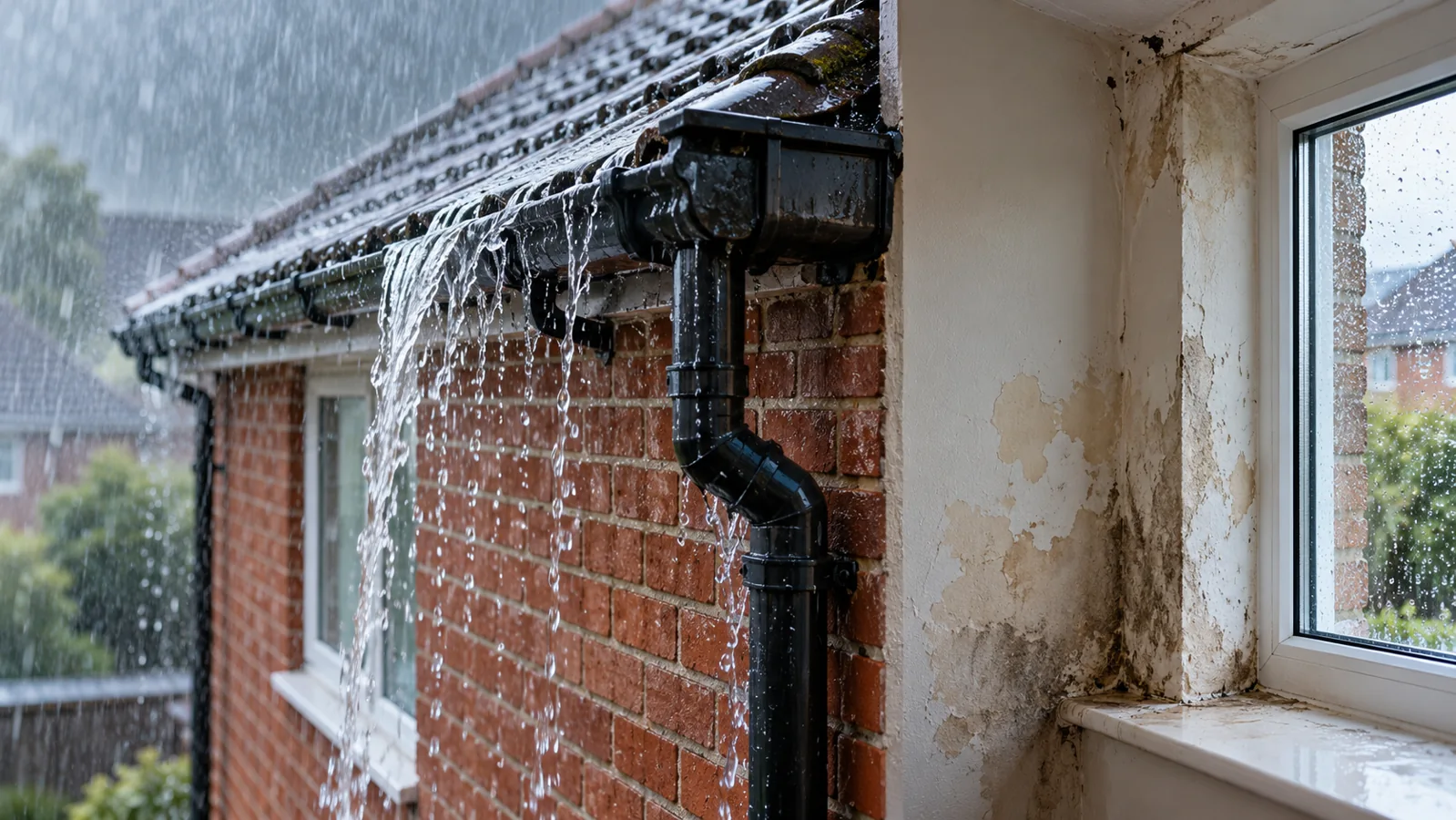
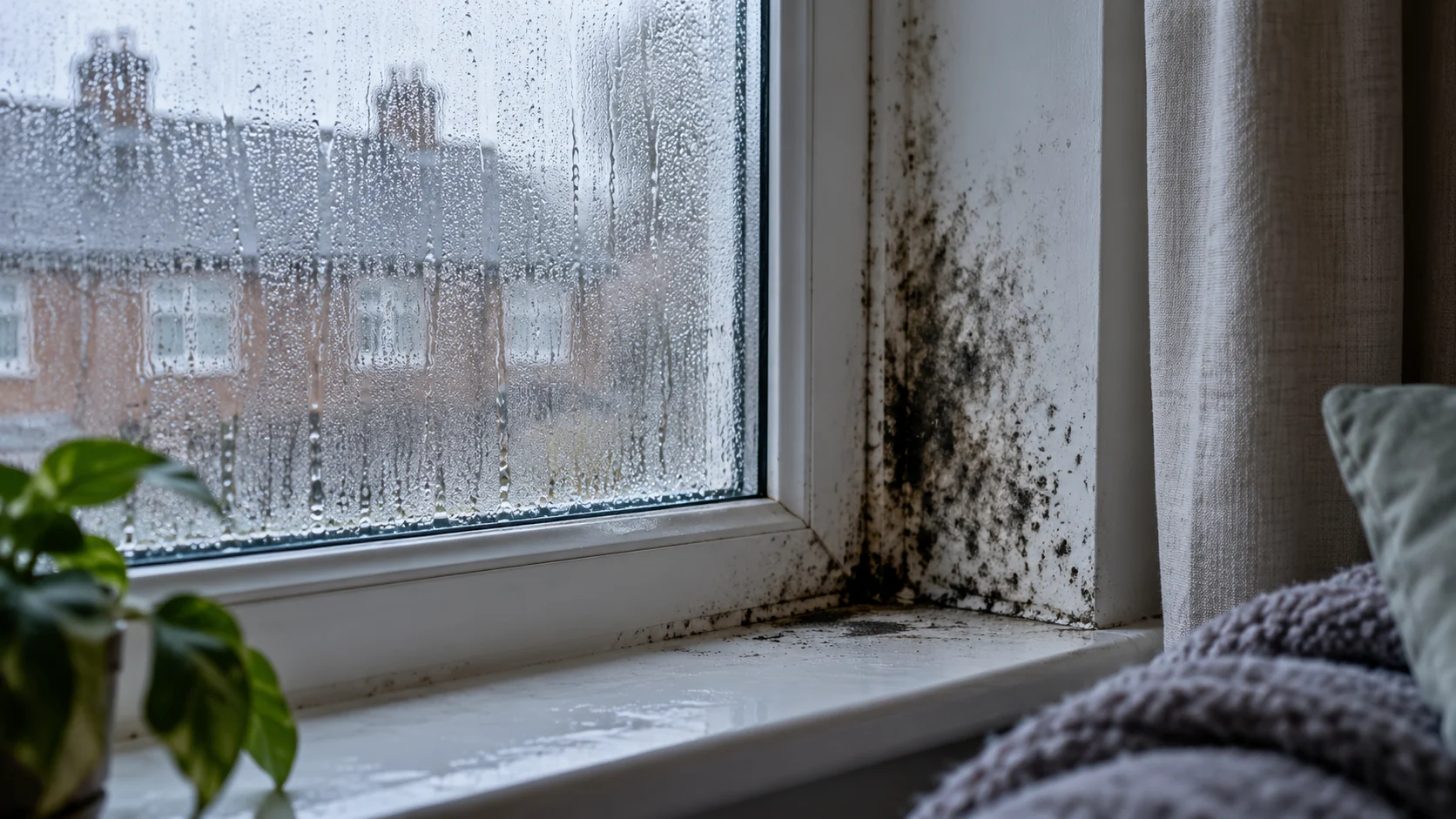
Condensation on cold glass is common, but persistent moisture deserves attention.
Read the guide →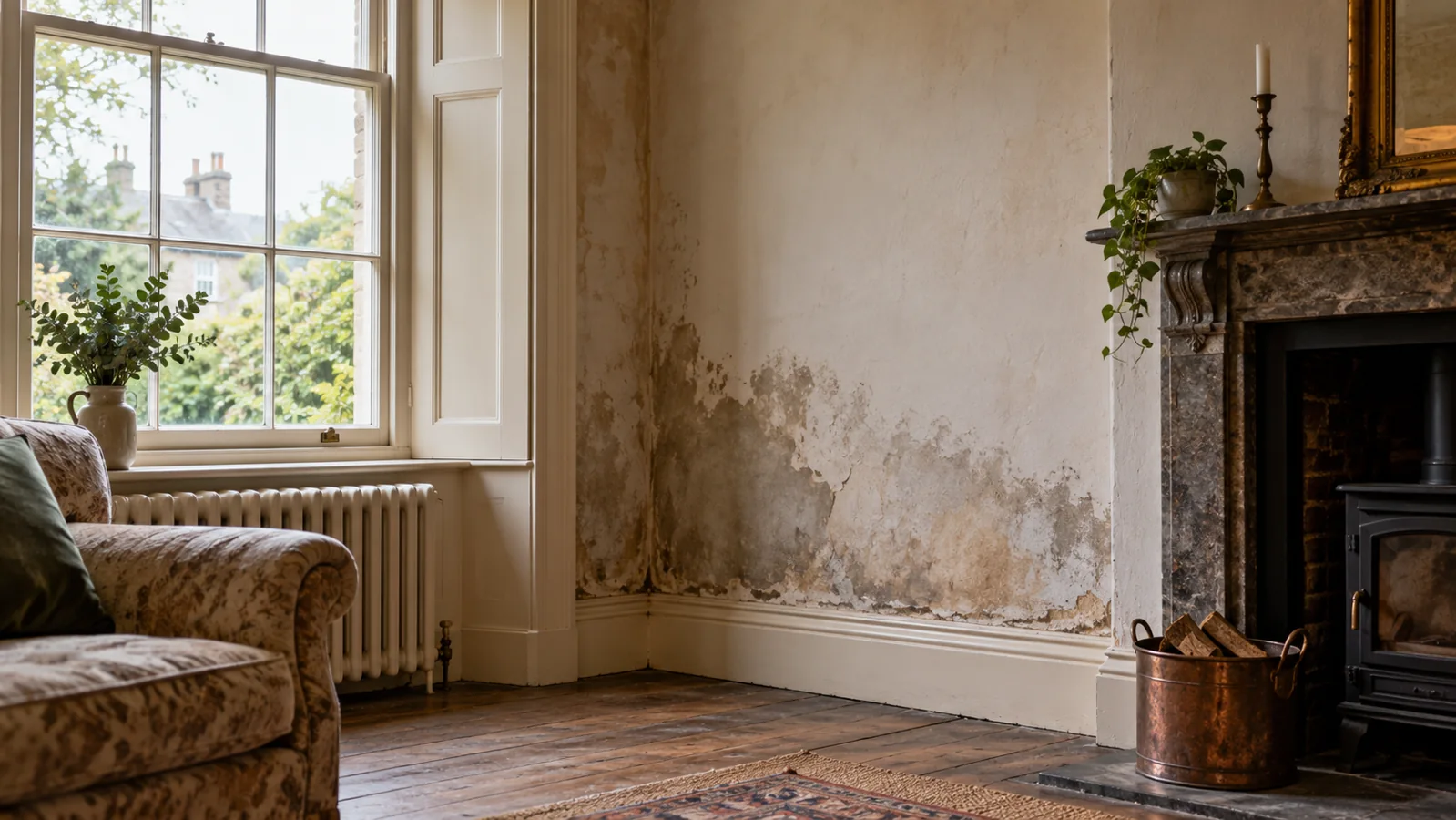
Mould needs moisture; the job is to identify why the surface stays damp.
Read the guide →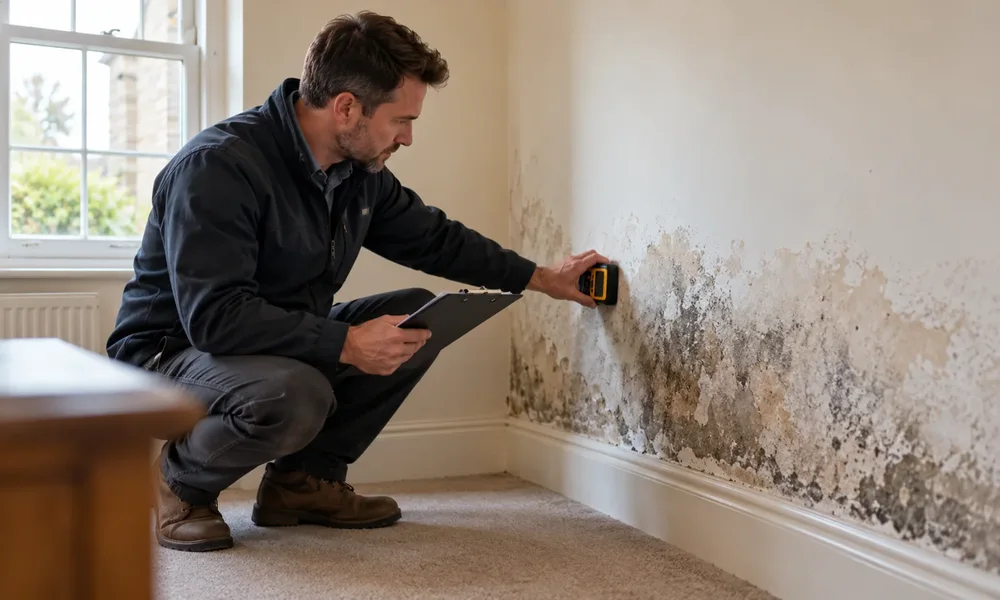
Follow the timing and entry route before assuming you need damp-proofing.
Read the guide →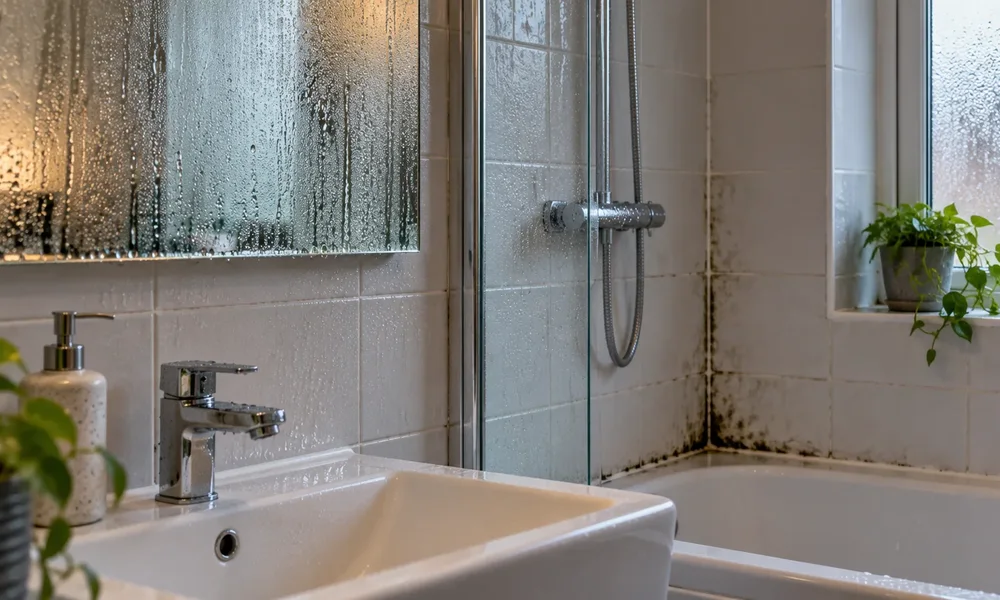
Understand what meter readings can and cannot tell you.
Read the guide →Damp may be caused by more than one problem. Some cases are straightforward; others need an experienced surveyor who understands the construction of the building.
We explain possible causes, the questions to ask and the limitations of different treatments. Our guides do not replace a site inspection.
About DampUK →We point readers towards official government advice, Historic England and independent housing resources.
Look for a suitable local professional and explain the symptoms clearly. You can use an external trade-matching service to request quotes; check credentials and the proposed diagnosis before agreeing to work.
Find local tradespeople on MyJobQuote →Opens MyJobQuote. DampUK does not select or endorse individual contractors.