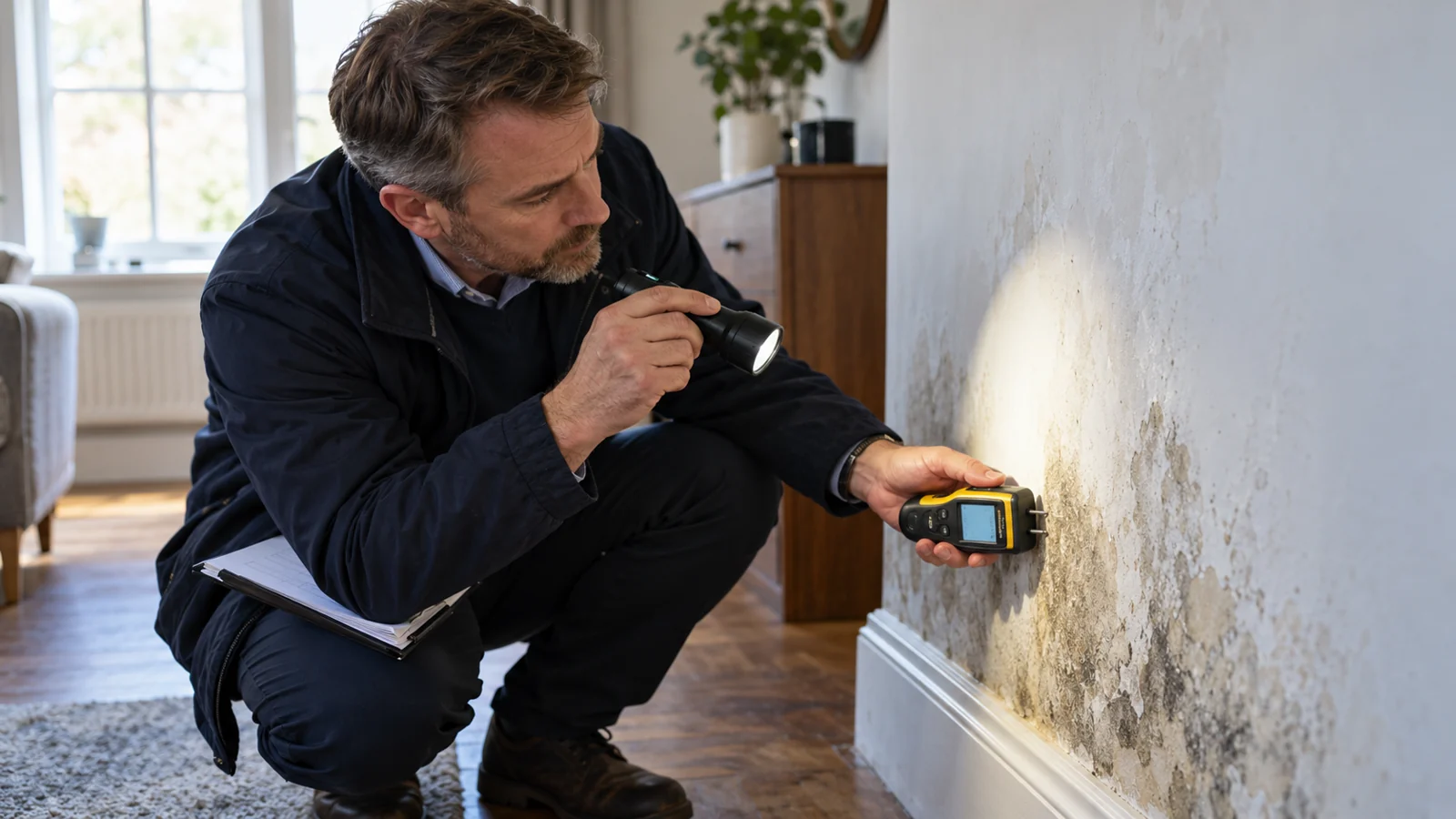
What the meter measures
Many instruments used during damp inspections are electrical resistance or capacitance meters. They respond to properties of the material being tested and often display comparative readings rather than a direct measurement of the amount of water in a masonry wall.
Most handheld pin-type meters infer moisture from electrical resistance. Capacitance meters respond to changes in electrical properties behind the surface. Both can be useful for comparing locations, but plaster salts, metal, foil-backed materials and different substrates can change readings.
A number on the display should not be treated as a direct percentage of water in brickwork unless the equipment and method are appropriate for that material.
Why readings can mislead
Salts, conductive materials, dense plaster, foil-backed linings and metal beneath the surface can influence readings. A reading from timber cannot simply be interpreted in the same way as one taken from plaster. Surface condensation can also change the result.
Where a meter helps
A trained inspector can use it to compare nearby areas, map the extent of a suspected leak or choose areas for further examination. Repeated readings under similar conditions can help track changes. The pattern is often more useful than a single number.
Compare affected and unaffected areas of similar construction, and note where readings are taken. Record recent weather, heating conditions and visible evidence. A systematic survey can help direct further inspection, including checks for plumbing and rainwater defects.
Meter readings without an explanation of the building are not a sound basis for recommending expensive injection treatments.
What a good survey includes
It should consider the building design, external ground levels, roof and gutters, plumbing, ventilation, heating, salts, materials and weather. Sometimes opening up or laboratory testing is justified. The investigator should explain uncertainty rather than present a convenient assumption as a fact.
Questions to ask
Ask which meter was used, what the display represents, whether the instrument is appropriate for the material, and how the proposed cause was independently checked. Request the basis for recommending chemical injection, waterproof plaster or another expensive measure.
For disputed or complex damp problems, a competent independent surveyor may consider intrusive sampling or laboratory methods. Such testing should answer a clear question and be proportionate to the problem.
Ask a contractor to explain both the uncertainty and why the proposed remedy would fix the identified source.
Act on evidence
Have an obvious leak or building defect repaired. In uncertain cases, consider an independent surveyor with suitable experience of the construction type. Avoid committing to extensive treatments solely because a handheld instrument flashes red.
If a report shows a diagram of readings, ask the surveyor to explain what was measured and how the result was interpreted. Some instruments are calibrated for wood and display values that should not be read as masonry moisture percentages. Salts from past leaks can raise electrical readings even after free water has reduced. This makes historical repairs and the type of plaster relevant. Repeated readings may be useful for monitoring only if conditions, material and technique are kept reasonably consistent.
Keep dated photographs and notes of any changes. They can be useful when explaining the issue to a surveyor or contractor. If there is active water near electrics, an unstable ceiling, or a floor that appears unsafe, arrange prompt professional help rather than waiting to see whether the problem improves.
Need help from a local damp specialist?
Look for a suitable local professional and explain the symptoms clearly. You can use an external trade-matching service to request quotes; check credentials and the proposed diagnosis before agreeing to work.
Find local tradespeople on MyJobQuote →Opens MyJobQuote. DampUK is an information website and does not select or endorse individual contractors.