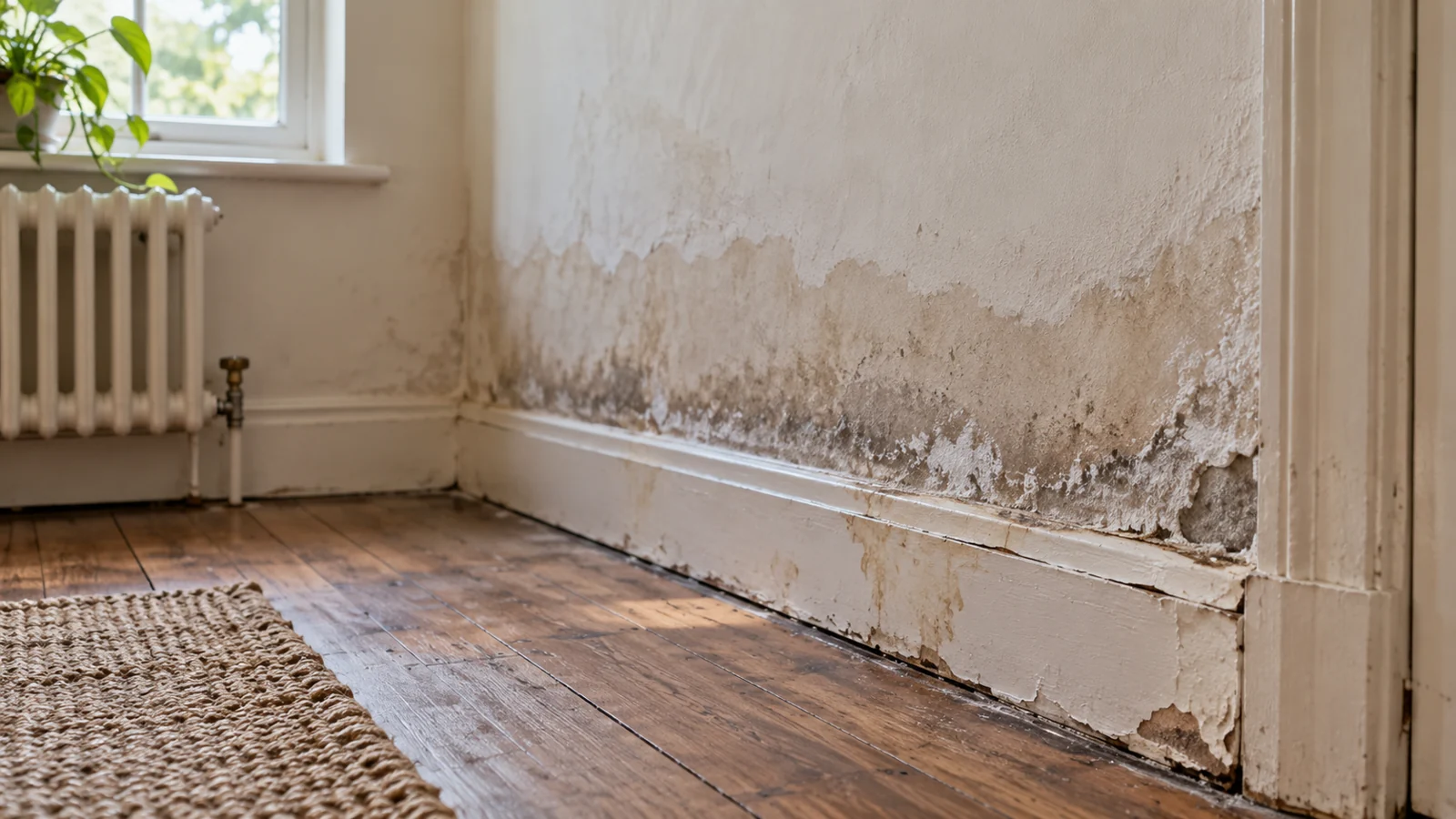
Start with the pattern
Notice whether the patch follows a single wall, appears beside a door, or extends around the whole room. A patch that follows heavy rain suggests a different investigation from one that changes little through the seasons. Record when it appears and whether it becomes worse.
A low damp patch next to an outside doorway may have a different cause from staining along an entire internal partition. Check whether the affected surface is an external wall, a chimney breast or a wall adjoining a bathroom. Record the height and width of the patch, and whether it changes after rainfall or during cold weather. A photograph with a ruler beside the stain is more useful than a vague description of it as rising damp.
A wall may look dry between wetting events while salts remain in the plaster. Conversely, condensation can make a cold area feel persistently damp even without water coming through the masonry. There is no reliable diagnosis from the height of a stain alone.
Check the outside first
Look at the ground level against the wall, paving that slopes towards the building, leaking rainwater pipes, overflowing gullies and blocked drainage. Water splashing against brickwork or collecting at the foot of a wall can imitate rising damp without any failure of a damp-proof course.
Look for hidden leaks
A plumbing leak beneath the floor or inside a wall can produce a persistent damp patch. Nearby water and heating pipes deserve attention, particularly where moisture remains after a long dry spell. A specialist may use pressure tests or other methods to establish whether a pipe is leaking.
On a suspended timber floor, poorly ventilated subfloor voids, wet ground and leaking pipework may affect nearby walls and joist ends. Around a solid floor, check for changes in flooring, new screeds and impermeable coverings that may alter where moisture evaporates. Never lift floorboards around cables or services unless it is safe to do so.
Outside, check the level of the path in relation to the damp-proof course, where visible, and whether surface water is directed towards the house. A defective gutter may wet the same wall repeatedly. Correcting a clearly identified defect and then allowing drying time can prevent unnecessary wholesale treatment.
What about rising damp?
Ground moisture can rise through porous masonry where a damp-proof course is missing, bridged or ineffective. It is a real possibility, but it needs to be distinguished from condensation, salts, penetrating moisture and water trapped by unsuitable finishes. The height of the mark alone does not prove the cause.
Be cautious with meter readings
Handheld electrical moisture meters can help map variations in materials, but salts, metal, plaster and surface conditions affect their readings. A high number on the display is not a diagnosis. Ask what other evidence supports the proposed explanation and whether the surveyor has inspected outside.
A useful report should include photographs, the location and extent of dampness, construction details and an explanation of competing causes. Electrical moisture meters can support an investigation but they are influenced by salts and materials. If a contractor recommends injection, ask which tests establish rising damp and why simpler causes have been excluded.
Get the proposed repair specified in writing, including any plaster removal, ventilation work and expected drying period. A guarantee matters less than an accurate diagnosis and an appropriate repair.
Choose the repair after the cause
If the problem is a faulty downpipe, repair that first. If raised paving is bridging a damp-proof course, look at whether it can be corrected. If genuine rising damp is established, discuss suitable treatments for the building. Allow for drying and review before replacing finishes.
If you are collecting quotes, be wary of recommendations made without the contractor examining the outside of the property. Ask whether the wall is solid or cavity construction and how the floor meets it. Request a specification that separates repairs to water entry from treatment of damaged finishes. A report that acknowledges uncertainty and suggests proportionate checks can be more valuable than a confident diagnosis made in a few minutes.
Keep dated photographs and notes of any changes. They can be useful when explaining the issue to a surveyor or contractor. If there is active water near electrics, an unstable ceiling, or a floor that appears unsafe, arrange prompt professional help rather than waiting to see whether the problem improves.
Need help from a local damp specialist?
Look for a suitable local professional and explain the symptoms clearly. You can use an external trade-matching service to request quotes; check credentials and the proposed diagnosis before agreeing to work.
Find local tradespeople on MyJobQuote →Opens MyJobQuote. DampUK is an information website and does not select or endorse individual contractors.