What should a damp survey include?
A reasoned inspection should record symptoms, likely sources, limitations and evidence.
Read guide →Good investigations explain what has been observed, what remains uncertain and which repair addresses the cause rather than the symptom.
Not sure of the cause? Use the leak finder →
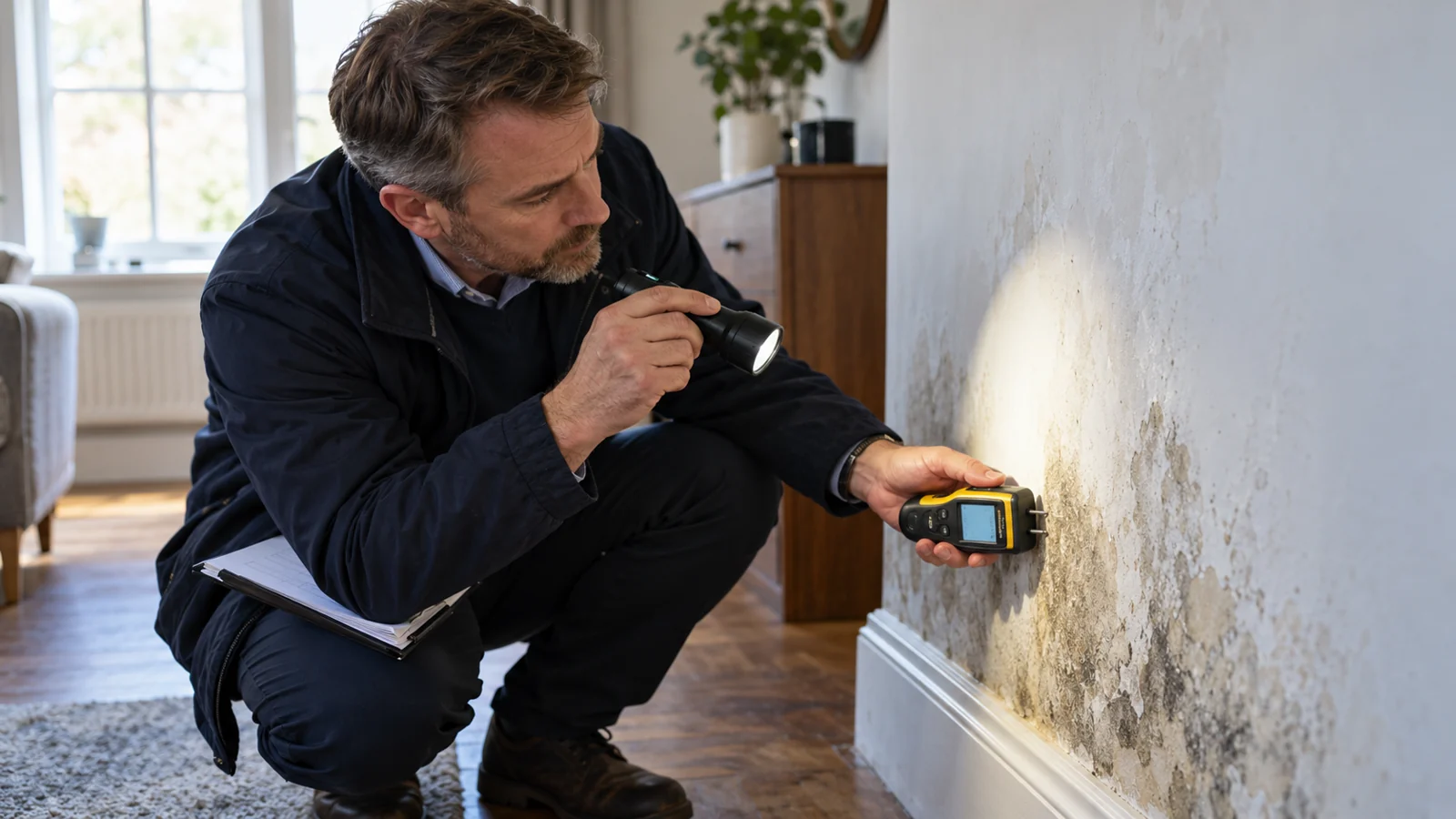
A reasoned inspection should record symptoms, likely sources, limitations and evidence.
Read guide →Consider whether the surveyor also sells a proposed treatment.
Read guide →Compare scope, investigation time, access and written reporting rather than a single headline fee.
Read guide →Intrusive work should follow a documented reason and an agreed making-good plan.
Read guide →Conflicting diagnoses or costly proposals can justify independent review.
Read guide →Specify the fault, extent, materials, exclusions and post-repair checks.
Read guide →Read exclusions, transfer rules and the identity of the guarantor.
Read guide →Lenders and purchasers may seek further investigation when surveys report moisture.
Read guide →Evaluate cause, repair scope, moisture extent and possible financing implications.
Read guide →A valuer may request more evidence, but outcomes vary with property and lender.
Read guide →Compare diagnoses and specification before comparing totals.
Read guide →They may alter surface behaviour without solving defective weathering details.
Read guide →Breathability, trapped moisture and wall construction should guide decisions.
Read guide →Responsibility depends on ownership, cause, lease terms and relevant agreements.
Read guide →Policy terms distinguish escape of water, tracing and access, and maintenance.
Read guide →