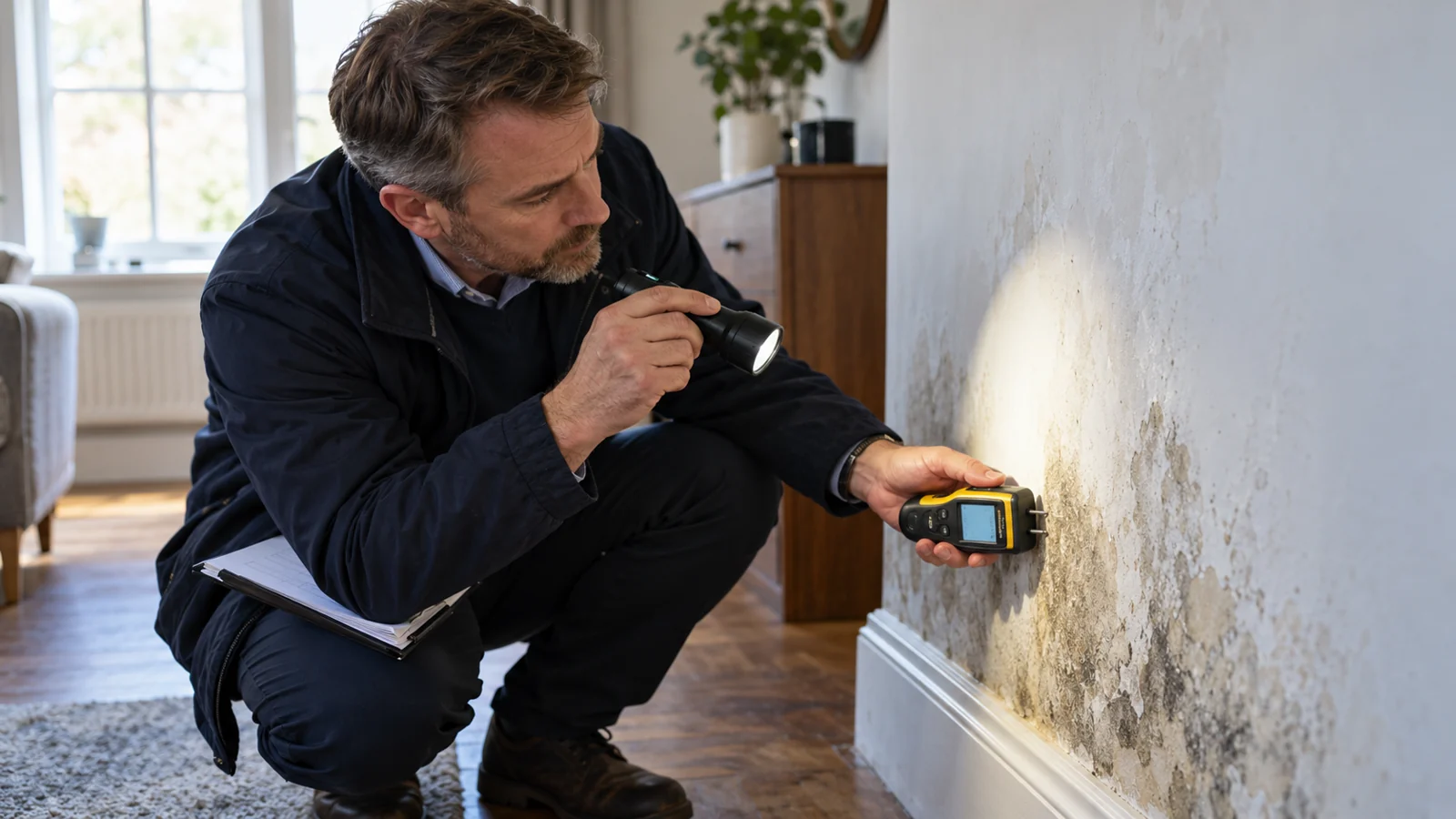
Illustration to explain the topic; not a diagnosis of any particular property.
Understand the construction first
A reasoned inspection should record symptoms, likely sources, limitations and evidence. Good investigations explain what has been observed, what remains uncertain and which repair addresses the cause rather than the symptom.
A useful report should describe where moisture was found, how it was measured, what construction is present and which alternative causes were considered. Quotations should distinguish investigation, remedial work and making good.
What the evidence may show
Has the proposed cause been supported by inspection evidence? Does the quotation describe the precise repair and exclusions? Would a separate surveyor offer a more independent assessment? These questions help narrow the possible route but do not prove the cause by themselves.
Make a note of when the mark first appeared, whether it changes after rainfall or use of an appliance, and whether the affected surface is actually wet. Keep dated photographs; they make it easier to compare changes rather than relying on memory.
Reasons the first diagnosis may be wrong
The visible position of the damp is only a starting point. A useful inspection explains the observed evidence, distinguishes likely causes from uncertainty and states what further checks are justified. A sales quotation alone is not the same as an independent building investigation.
Where the construction is concealed, the cause may need staged investigation. Resist choosing a treatment solely because one symptom resembles a familiar defect.
Practical checks before work begins
Obtain a written scope explaining the diagnosis, evidence, materials, likely disruption and how the result will be checked.
A useful report should describe where moisture was found, how it was measured, what construction is present and which alternative causes were considered. Quotations should distinguish investigation, remedial work and making good.
What to ask about the repair
The repair should interrupt the route by which water is reaching the building fabric, not simply cover the stain. For this particular concern, start with: a reasoned inspection should record symptoms, likely sources, limitations and evidence. Once the source is resolved, affected materials may still need time to dry. Salt deposits, damaged finishes or mould may require separate attention after the underlying defect has been corrected.
Ask what will be repaired, why that work is necessary and how its success will be assessed.
When professional help matters
Seek prompt help for ongoing water ingress, repeatedly spreading stains, significant mould, suspected structural deterioration or water near electrics. If ceilings bulge or sections appear unstable, keep people away from the affected area. It is safer to arrange an inspection than attempt work at height or around live electrical services.
If water is reaching electrical fittings, plaster is bulging or a ceiling appears unsafe, keep clear of the affected area and arrange prompt professional assessment. For less urgent defects, record the symptoms and ask for a clear diagnosis before authorising repairs.
Need someone to investigate the problem?
Describe the symptoms clearly and ask for a diagnosis before accepting extensive repair work.
Find local tradespeople on MyJobQuote →External trade-matching service. Check qualifications, references and the proposed repair.
Further reading
Historic England: investigating moisture · Citizens Advice: housing