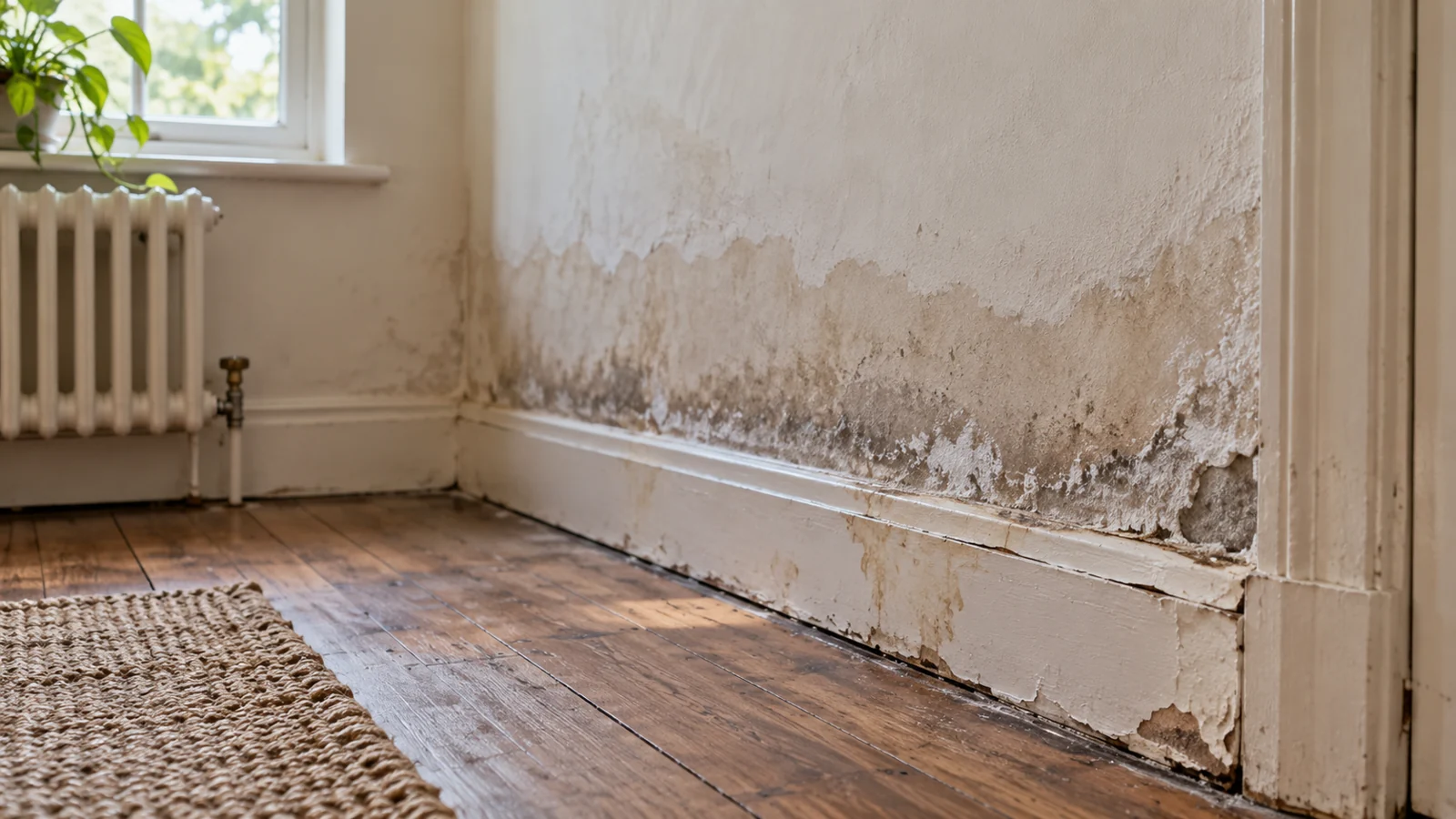
Rising damp is possible
Where ground moisture can pass into porous masonry, it may travel upwards by capillary action. A working damp-proof course normally helps interrupt that movement. Older buildings may have very different details from modern houses.
Rising damp involves moisture moving from the ground through porous material. It can occur, but a damp skirting board is not proof of that mechanism. A leaking pipe, rainwater running down a wall, a bridged damp-proof course or condensation can leave remarkably similar marks.
The age of the property also matters. Traditional solid walls often behave differently from modern cavity walls and may rely on breathable finishes to release absorbed moisture.
Symptoms are not proof
Low-level staining, salt deposits, peeling paint and damaged skirting can all occur for more than one reason. The appearance of a horizontal mark is not conclusive. Salts left by earlier wetting may also affect test readings long after a leak has been repaired.
Rule out simpler defects
Check bridging by soil or paving, overflowing gutters, defective drains, plumbing leaks, wet subfloors, rain penetration and condensation. In older properties, dense cement renders and modern impermeable finishes can complicate moisture behaviour.
Expect a surveyor to consider the site, the ground outside, drainage and the position of any damp-proof course. They should examine where moisture appears, when it occurs and whether other surfaces are affected. In harder cases, material sampling and laboratory methods may help distinguish moisture content from the effects of salts.
Beware of certainty based on one handheld meter reading on plaster. A meter can help locate unusual readings, but it cannot tell where water originated or prove a failed damp-proof course.
Ask about the survey method
A diagnosis based on a quick pass with an electrical meter deserves scrutiny. The report should explain building construction, exposure and alternative causes. In difficult cases a competent independent specialist may use additional testing.
Consider the proposed solution
Chemical injection can be appropriate in some situations, but it is not a universal answer to low-level dampness. The design, thickness and condition of the wall matter. Associated plaster replacement can be disruptive and expensive.
If there is a leaking gutter, clearing or repairing it is the first step. If soil bridges the damp-proof course, lowering the level may be appropriate after considering drainage and foundations. A genuinely defective damp-proof barrier may need a carefully designed remedy.
Ask exactly why the recommended system is suited to the building. A treatment warranty is not a substitute for diagnosing the source of moisture.
Make repairs proportionate
Do not undertake major damp-proofing before understanding the cause. Repair identifiable defects, review the response, and ask for a clear written explanation of why a particular remedial system is needed.
If the property has been altered, ask what changed shortly before the damp appeared. Replacement floors, a new patio, rendered walls or sealed fireplaces can alter moisture behaviour. If staining occurs only in one corner, check whether an external defect or concealed pipe follows that exact location. The time relationship between the alteration and the symptoms can be a useful clue, although it is not conclusive. Where there is a suspended timber floor, blocked ventilation or moisture beneath the floor may need checking as part of the diagnosis.
Keep dated photographs and notes of any changes. They can be useful when explaining the issue to a surveyor or contractor. If there is active water near electrics, an unstable ceiling, or a floor that appears unsafe, arrange prompt professional help rather than waiting to see whether the problem improves.
Need help from a local damp specialist?
Look for a suitable local professional and explain the symptoms clearly. You can use an external trade-matching service to request quotes; check credentials and the proposed diagnosis before agreeing to work.
Find local tradespeople on MyJobQuote →Opens MyJobQuote. DampUK is an information website and does not select or endorse individual contractors.