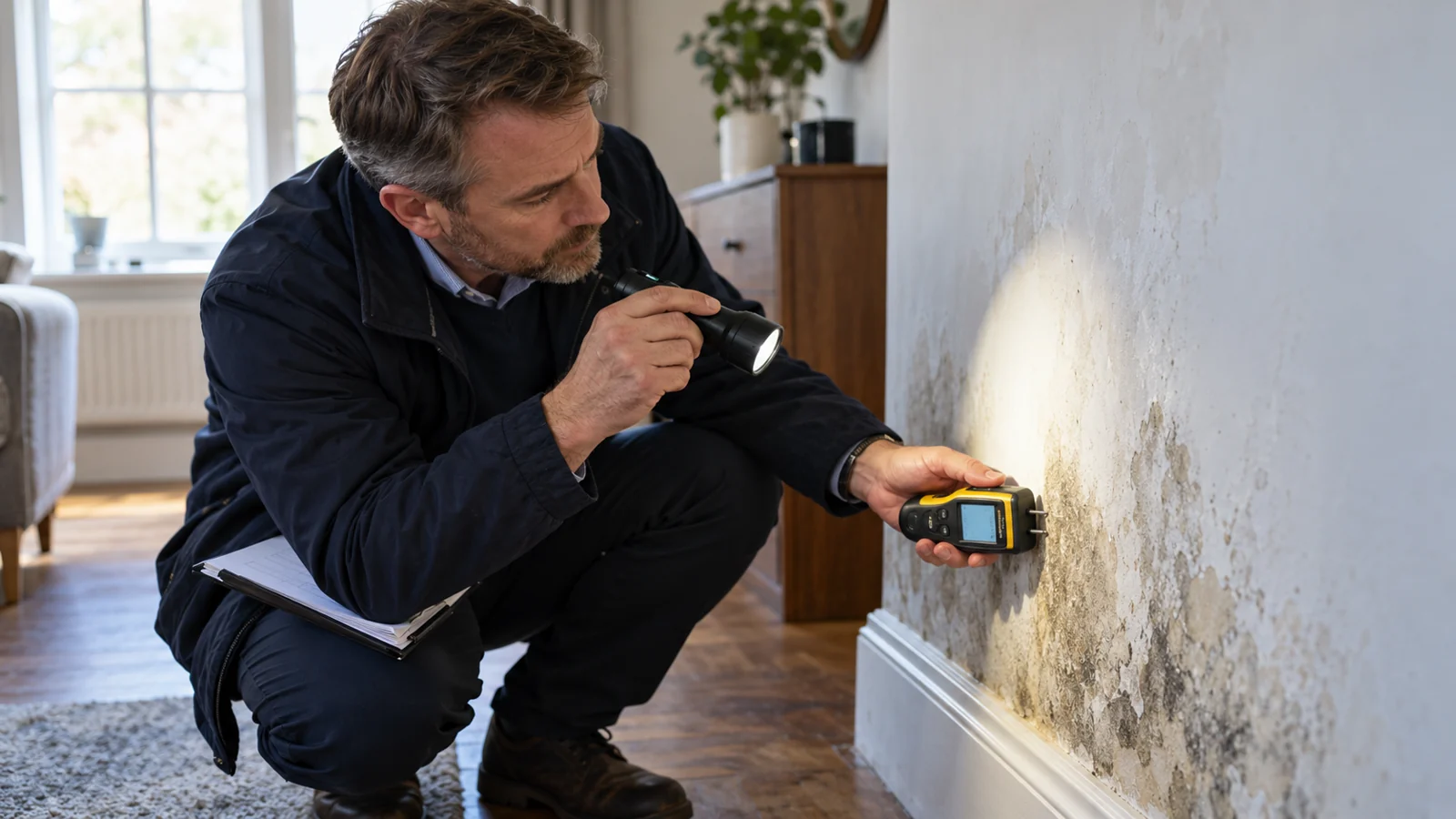
When an inspection helps
Recurring patches, unexplained mould, damp affecting several rooms and suspected rotten timber are all reasons to consider an investigation. A clear plumbing or gutter leak may be dealt with directly, provided its full effects are understood.
A useful investigation answers where moisture is coming from, how it travels and what needs to change. It is not simply a list of high readings or a quotation for one company’s treatment system.
Give the surveyor dated photographs, information about storms, previous plumbing leaks and any earlier damp-proofing work. Good background information can reduce guesswork.
What the survey should cover
The inspector should examine relevant interior and exterior conditions, the building type, ground levels, rainwater goods, ventilation, plumbing and previous repairs. Difficult cases may require more testing or opening up.
Independent or contractor survey?
A contractor can provide useful diagnostic work, but one selling a particular system has a commercial interest. An independent building surveyor with relevant expertise may be valuable before a major commitment.
Some free surveys are primarily intended to generate treatment quotations. That does not automatically make them unreliable, but the commercial purpose should be clear. An independent survey with a written report may be worthwhile where proposed repairs are expensive or diagnoses conflict.
Ask whether roof, rainwater goods, ground levels, ventilation, plumbing and building materials will be considered.
Beware a quick diagnosis
A brief visit followed by meter readings and an injection quotation is not enough for every problem. Ask how alternative explanations were ruled out and which evidence shows the proposed work will help.
Ask for clear writing
Request photographs, observations, probable causes, limitations, recommended investigations and prioritised repairs. Where a cause is uncertain, the report should say so rather than treating uncertainty as a sales opportunity.
A clear report should distinguish observed facts from likely causes and proposed remedies. It should explain unresolved uncertainty, any further tests and what improvement to expect after repair.
Compare quotations against the same diagnosis and specification instead of choosing solely on price or length of guarantee.
Use findings sensibly
Get quotations for defined repairs and compare their scope, not just the total price. Check qualifications, references, warranties and whether someone will review the result after the structure has dried.
Before arranging a visit, ask whether the resulting report will belong to you and whether it is suitable for seeking competitive repair quotations. Confirm if the inspector will examine the outside as well as indoors, and whether access to roof spaces or floor voids is included. If access is restricted, the limitations should be stated. Where the property is older or listed, mention this in advance so the person carrying out the survey can plan an appropriate investigation and consider compatible materials.
Keep dated photographs and notes of any changes. They can be useful when explaining the issue to a surveyor or contractor. If there is active water near electrics, an unstable ceiling, or a floor that appears unsafe, arrange prompt professional help rather than waiting to see whether the problem improves.
Need help from a local damp specialist?
Look for a suitable local professional and explain the symptoms clearly. You can use an external trade-matching service to request quotes; check credentials and the proposed diagnosis before agreeing to work.
Find local tradespeople on MyJobQuote →Opens MyJobQuote. DampUK is an information website and does not select or endorse individual contractors.