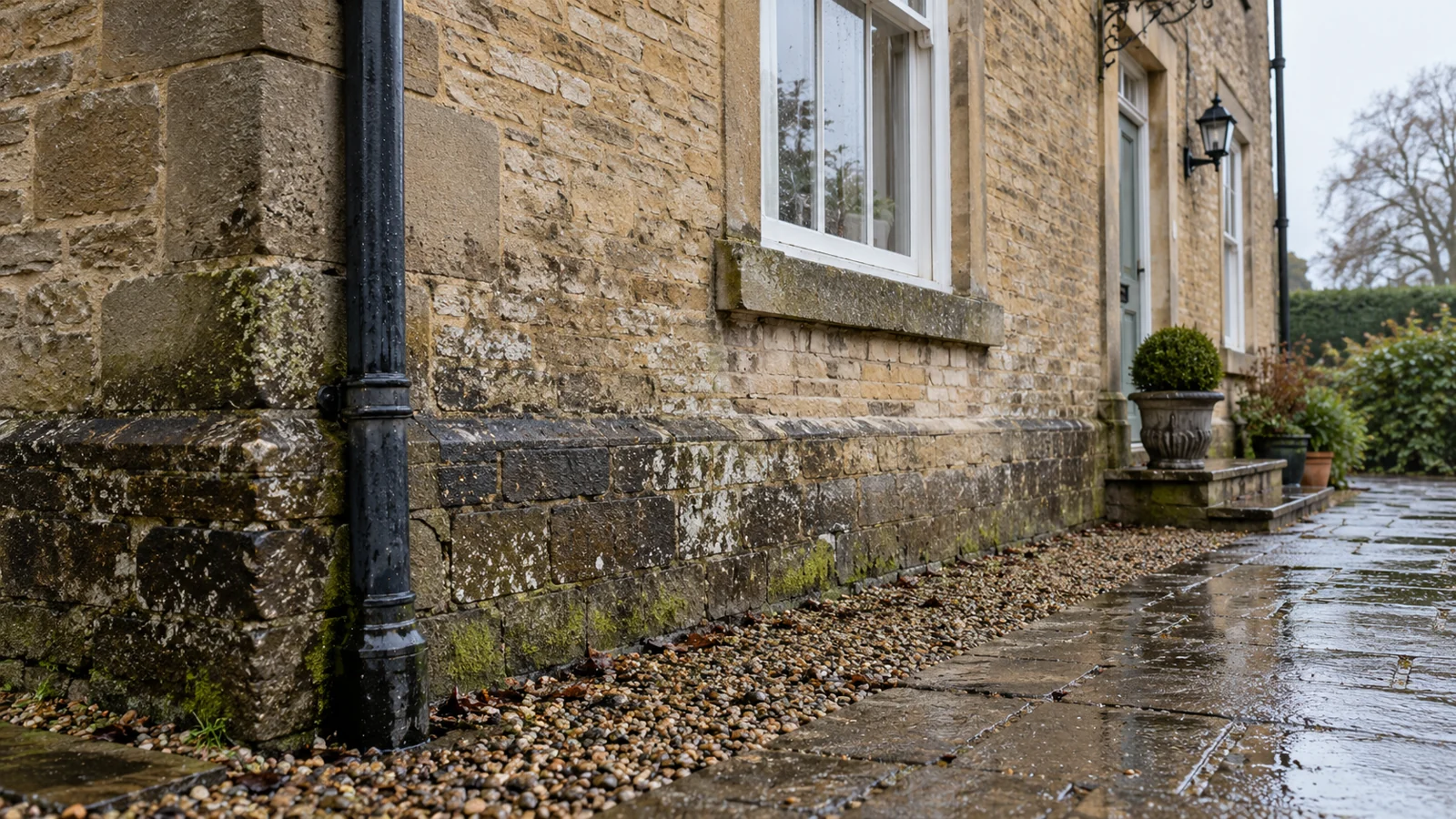
Construction changes the answer
Many older houses have solid walls, lime mortars and materials intended to absorb and release moisture. They do not necessarily respond like modern cavity walls with membranes and engineered ventilation details.
Traditional solid masonry, lime mortars and vapour-permeable plasters can absorb and release some moisture. Cement renders, dense gypsum repairs or impermeable paints may alter that balance and make damp patches appear elsewhere.
That does not mean old houses must always be damp. It means the construction deserves careful consideration before applying modern systems.
Find how water moves
Rain exposure, external ground levels, drainage, indoor humidity and past alterations all affect the picture. Dense cement render, hard pointing and impermeable internal finishes can sometimes reduce drying or redirect moisture.
Do not assume a missing DPC is the cause
An older wall without a modern damp-proof course is not necessarily defective. Some remain dry because surrounding drainage, ventilation and materials allow moisture to disperse.
Check gutters, downpipes, roof junctions, ground levels and drainage. Look for hard paving laid too high against a wall or blocked air bricks near a timber floor. Photograph changes seasonally.
Pay attention to chimney breasts, disused fireplaces and external corners, where moisture and salts may have more than one cause.
Survey with suitable expertise
An investigator should understand traditional construction and be able to distinguish harmful damp from the normal moisture present in building materials. Measurement techniques have limitations and need interpretation.
Choose compatible repairs
Possible work includes fixing gutters, maintaining sound lime mortar where appropriate, correcting drainage and carefully reviewing modern finishes. Specifications should consider the original fabric and any conservation requirements.
Ask whether the surveyor understands traditional building materials and whether proposed finishes are compatible with the existing wall. A repair that works for a modern cavity wall might be unhelpful in a historic solid-walled house.
Historic England publishes technical guidance on moisture investigation in traditional buildings and is a useful reference when considering major work.
Avoid blanket treatments
Injecting every wall, applying waterproof renders throughout or replacing historic finishes can be unnecessary or counterproductive. Make the work proportionate to a properly established defect.
Older houses can be changed by apparently minor works. A replacement concrete floor, hard repointing, a non-breathable decorative coating or blocked fireplace ventilation may alter the way moisture moves and dries. It is worth looking at when these changes were made relative to the first appearance of staining. Equally, traditional materials are not a reason to accept serious leaks. Defective roofs, rainwater goods and drains still need maintenance, and rotting structural timber needs proper investigation.
Keep dated photographs and notes of any changes. They can be useful when explaining the issue to a surveyor or contractor. If there is active water near electrics, an unstable ceiling, or a floor that appears unsafe, arrange prompt professional help rather than waiting to see whether the problem improves.
Need help from a local damp specialist?
Look for a suitable local professional and explain the symptoms clearly. You can use an external trade-matching service to request quotes; check credentials and the proposed diagnosis before agreeing to work.
Find local tradespeople on MyJobQuote →Opens MyJobQuote. DampUK is an information website and does not select or endorse individual contractors.