What is happening
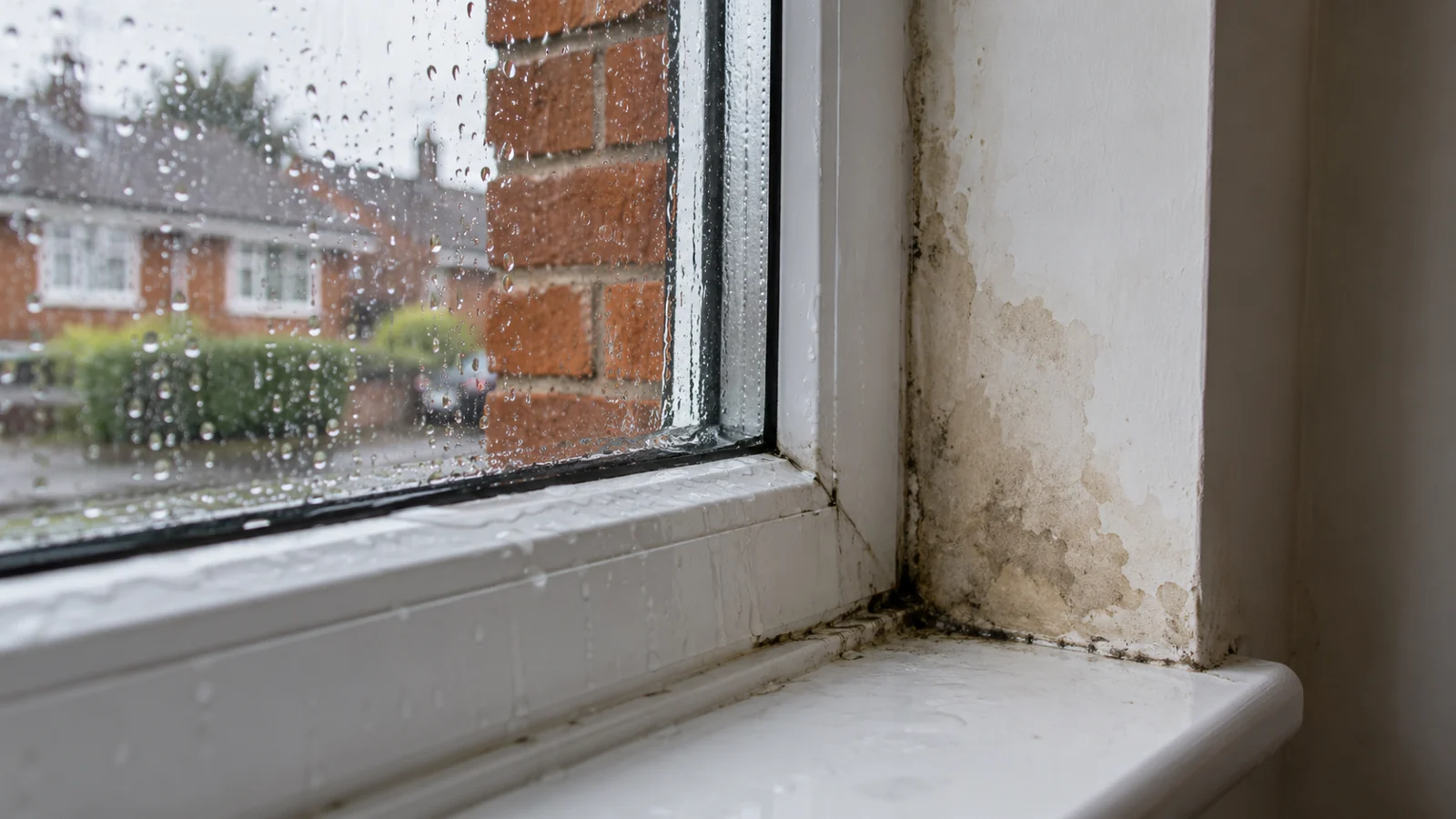
Warm indoor air can hold water vapour. When it meets cold glass, its temperature falls and some moisture condenses into droplets. This often happens overnight when outdoor temperatures fall and rooms are cooler.
Warm air holds water vapour. When moist indoor air meets cold glass, the surface may fall below its dew point and droplets form. Older single glazing and poorly insulated window edges can become especially cold.
Condensation between the panes of a sealed double-glazed unit is a different problem and often suggests that the sealed unit has failed. Wiping the inside surface will not address moisture trapped between panes.
Where the water appears matters
Droplets on the room-facing surface usually indicate indoor condensation. Moisture trapped between panes of a sealed double-glazed unit suggests failed glazing seals. Water appearing around the frame during rain may indicate another defect.
Understand indoor moisture
Cooking, bathing, laundry and everyday activity introduce moisture. Poorly functioning extractors, blocked vents and inadequate background ventilation can allow it to accumulate.
Note which windows are worst, whether the room was occupied overnight, whether curtains were closed and whether there is mould on adjacent reveals. Compare kitchens, bedrooms and bathrooms rather than assuming all rooms have the same conditions.
A simple humidity monitor can indicate whether moisture levels are elevated, although it cannot by itself identify a leak. Persistent water collecting on sills should be dried to limit damage to finishes and timber.
Reduce condensation sensibly
Use working extraction when cooking and bathing, keep trickle vents open where provided, maintain safe ventilation and dry laundry appropriately. Maintaining adequate heat can help reduce cold surfaces. Avoid advice that makes homes dangerously cold or relies solely on opening windows all winter.
Do not ignore mould
Repeated water running onto timber sills and frames can contribute to decay and mould. Wipe up water, check seals, and investigate persistent black spotting around reveals.
Check mechanical extraction in kitchens and bathrooms, ventilation routes and whether window vents have been obstructed. Drying clothes indoors can increase moisture load. Maintain reasonable temperatures where affordable, and look for cold bridges or damaged seals.
Do not overlook rainwater ingress around the frame, particularly if staining follows storms rather than cold mornings.
Know when to investigate further
If condensation is severe despite reasonable heating and ventilation, investigate cold bridging, insulation, heating and extraction. A window replacement may not be necessary to address the underlying conditions.
Start by distinguishing water on the room side of the glass from water between sealed panes or on the outside. These have different explanations. Occasional external morning condensation on efficient double glazing can be normal. Internal condensation needs attention when it wets the sill, damages paint or accompanies mould. The aim is not to keep every pane dry in every weather condition; it is to reduce persistent excess moisture and protect the building fabric. Window replacement on its own may not resolve the cause.
Keep dated photographs and notes of any changes. They can be useful when explaining the issue to a surveyor or contractor. If there is active water near electrics, an unstable ceiling, or a floor that appears unsafe, arrange prompt professional help rather than waiting to see whether the problem improves.
Need help from a local damp specialist?
Look for a suitable local professional and explain the symptoms clearly. You can use an external trade-matching service to request quotes; check credentials and the proposed diagnosis before agreeing to work.
Find local tradespeople on MyJobQuote →Opens MyJobQuote. DampUK is an information website and does not select or endorse individual contractors.